
Reviewed · CATANIA TOURS
Benedictine Monastery of Catania – English Guided Tour
The monastery’s most surprising feature is how many eras it holds under one roof: Roman remains sit below a university library, while a cellar built on lava lies beneath one of Europe’s largest monastic complexes. I like the contrast between its late Baroque scale and its present-day university life, and the chance to see rooms and passages that are not normally open to casual visitors.
The tour lasts just 75 minutes, so it fits neatly into a day in Catania, but the complex is large and the story spans centuries. You’ll get a brisk introduction rather than time to study every room at leisure, and access to particular areas, including a viewing platform, may vary by tour time.
Key points to know before you go
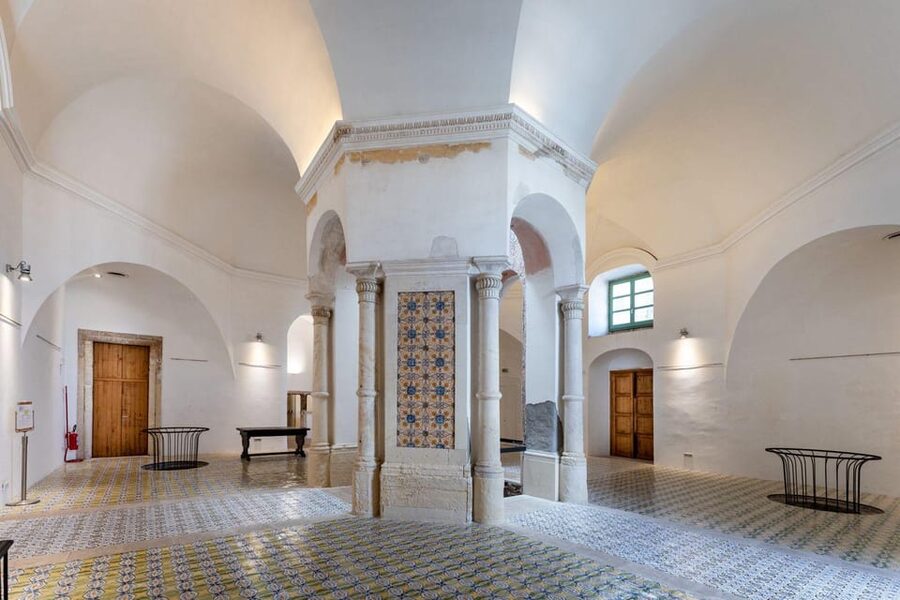
- Roman remains beneath a modern library: See an ancient Roman house below a mezzanine used by university students.
- A monastery on a monumental scale: The late Baroque complex ranks among Europe’s largest monasteries.
- Rooms beyond the cloisters: The route can include kitchens, a novices’ garden, dining rooms and lava-built cellars.
- A building with a new purpose: The former monastery now serves the University of Catania, including as a library.
- A strong guide-led visit: English-speaking guides such as Carmen, Giovanni and Nicola are known for lively explanations and local stories.
- A short, affordable tour: At $11 per person for 75 minutes, it offers a compact way to understand a major Catania landmark.
Why this monastery is worth your time
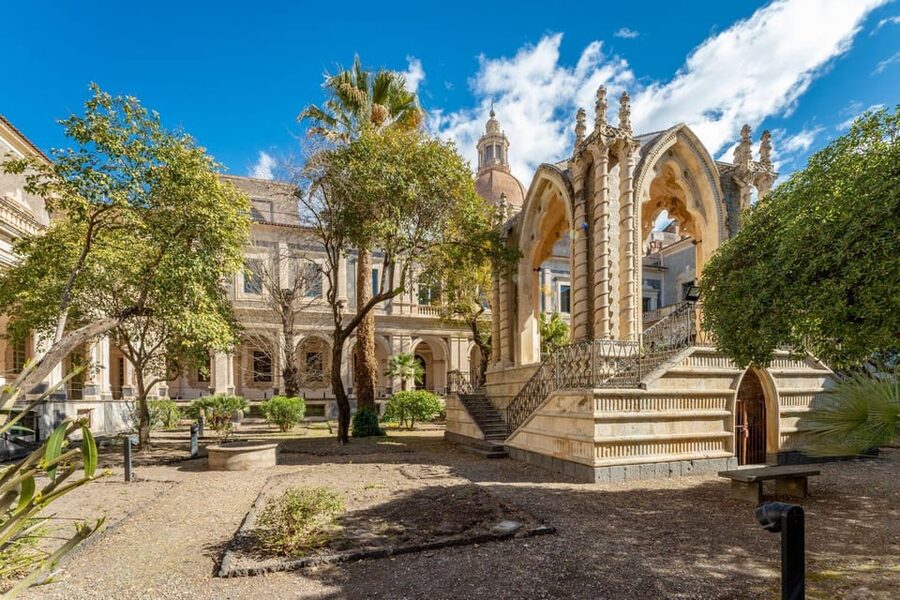
The Benedictine Monastery of San Nicolò l’Arena is not simply a handsome church or a quiet cloister. It is a vast complex where the layers of Catania’s past remain visible, from Roman-era structures to the monastery’s Baroque rebuilding and its modern university use. A guided visit helps connect those layers instead of leaving you to puzzle over a series of impressive rooms.
The tour’s appeal lies in that connection. You can move from a formal courtyard into a cloister, then encounter ancient remains below a contemporary library. The building’s current role matters: students still use parts of the complex, so the monastery is not a sealed monument detached from daily life.
At $11 per person, the price is modest for a 75-minute guided visit that includes access to areas not normally open to the public. It is especially good value if you want context, not just a quick look at the architecture. The guide can explain how the spaces were used, how the building changed, and why Roman remains and modern university facilities exist side by side.
More guided tours in Catania:
- Catania: Mount Etna Adventurous Tour with a Volcano Guide
★ 4.7 · 736 reviews - Catania: Heart of the City Guided Walking Tour
★ 4.6 · 708 reviews - Catania: Underground Catania Tickets and Guided Tour
★ 4.6 · 536 reviews
Start in Piazza Dante and look up
The meeting point is inside the main gate on Piazza Dante. Once through the gate, find the information point in the courtyard on your right. The tour starts and finishes at the Benedictine Monastery of San Nicolò l’Arena, which makes the logistics simple if you are already exploring central Catania.
Take a moment in the courtyard before the guide begins. The scale of the complex is part of the story: this was no small religious house, but a powerful Benedictine institution with the means to build on a grand scale. The tour explains that wealth through the architecture and the spaces devoted to monastic life.
The route leads through the monastery’s maze of corridors and rooms. That layout is part of its character, but it can make a self-guided visit less satisfying. A guide gives you a thread to follow through the centuries and points out places you might otherwise pass without understanding.
Two cloisters, two different ways to read the place
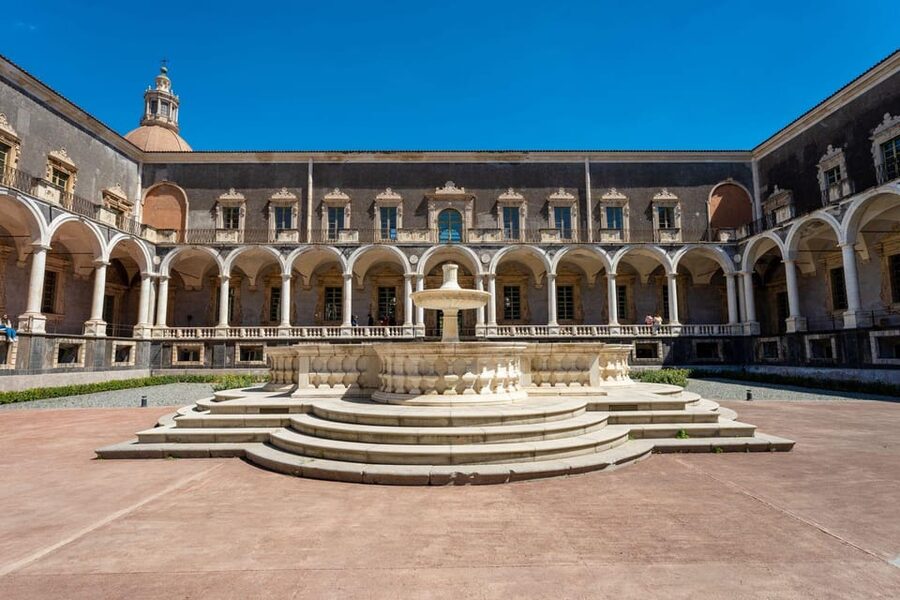
The two cloisters are among the most important stops. They offer a calmer view of the complex than the grand interior spaces, while showing how monastic life was organized around shared courtyards. Look for the changes in scale and design as you move through the site: the monastery expanded and changed over time, rather than appearing all at once in a single architectural moment.
The cloisters also help put the monastery’s size into perspective. Their open spaces sit within a much larger network of kitchens, dining rooms, gardens, libraries and service areas. The guide’s explanations make those connections useful: you are not just looking at a pretty courtyard, but seeing how different parts of a self-contained religious community fitted together.
Expect a steady route rather than a long pause at each stop. If you enjoy taking photographs or studying architectural details, use any moments when the group stops to look closely. The 75-minute format gives you a good overview, but not an unhurried visit to every corner.
The novices’ garden and the working life of the monks
The Garden of the Novices offers a different angle on monastic life. It brings the tour away from formal architecture and toward the routines of people who lived and trained within the complex. The name alone signals its purpose: this was a place tied to the formation of new members of the religious community.
The kitchens and dining rooms reveal another practical side of the monastery. The 18th-century kitchens are a highlight, not only for their scale but for what they suggest about the institution’s resources and daily rhythms. A monastery this large needed spaces to feed its community, and these rooms help make that work tangible.
The guide can also place the architecture in the context of Catania itself. The monastery’s story is bound to the city’s history, and the tour ranges beyond the building when explaining how the area changed. Guides including Carmen and Giovanni have been praised for adding local stories and humor, which can make dates and architectural details easier to remember.
Same island, a different kind of day:
- Catania: Mount Etna Morning or Sunset Day Trip with Tasting
★ 4.8 · 4,028 reviews - Catania: Sunset Jeep Tour of Mount Etna and Lava Flow Caves
★ 4.8 · 2,113 reviews - Sicily: Etna and Alcantara Gorges Full-Day Tour with Lunch
★ 4.8 · 1,766 reviews - Catania: Etna Sunset Tour with Pickup and Drop-off
★ 4.8 · 1,348 reviews
Roman Catania beneath the university library
One of the most striking transitions comes at the library. A 16th-century cellar is now used as the Library of the Department of Humanities at the University of Catania. Beneath a modern mezzanine used by students, you can see a Roman house, an unexpected archaeological layer under a working academic space.
This is where the monastery’s long timeline becomes especially clear. Ancient Roman remains, later monastic buildings and present-day university life occupy the same site. The arrangement is not a staged reconstruction. It reflects how Catania has continued to build, adapt and use its spaces across the centuries.
The modern refurbishment project by architect Giancarlo De Carlo made it possible to preserve and use the complex in a new way. Restoration lasted more than 30 years, a useful detail to keep in mind as you move through rooms that combine historic fabric with contemporary use. The point is not that every surface looks untouched. Rather, the building has been adapted so its past remains accessible while the university carries on around it.
The library cellar is also a reminder that the monastery is still part of the city’s working life. You may see signs of that university use during your visit. For me, this is one of the tour’s most valuable contrasts: the site is both an archaeological and architectural record, and a place people still use.
Lava-built cellars and the monastery’s foundations
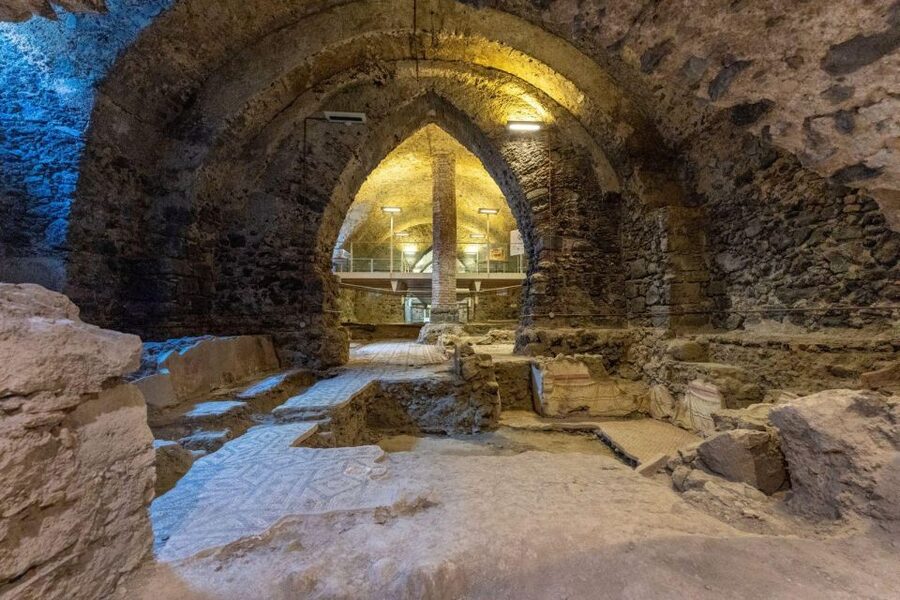
The cellars add a distinctly Catanian note to the route. Some were built on lava, linking the monastery’s foundations to the volcanic ground beneath the city. In a place shaped by Mount Etna, that detail helps connect the building to its setting rather than treating it as an isolated monument.
The route includes a 16th-century cellar now used by the university library, as well as the famous 18th-century kitchens and cellars. These spaces have different histories and functions, so pay attention to the guide’s explanations rather than treating all underground rooms as one stop. The details help show how the complex changed over time and how its practical spaces supported a large community.
A visit below ground can also offer a welcome change from the heat outside, as one summer visitor found. That does not make the cellar a guaranteed cool refuge in every season, but it is a useful bonus on a hot day. The route’s underground rooms are among its most distinctive stops, and they add texture to a tour that could otherwise focus mainly on grand architecture.
Vaccarini, the staircase and Baroque ambition
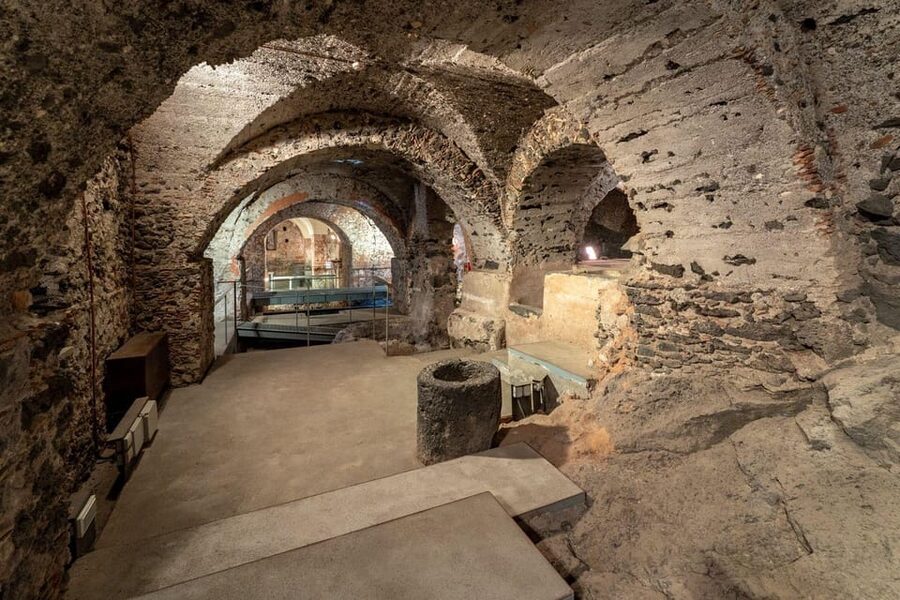
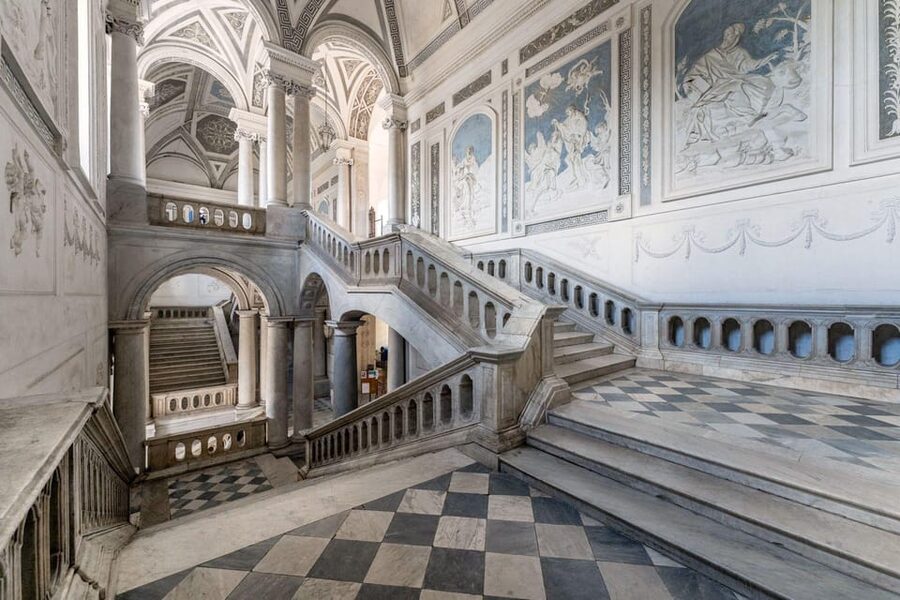
The architect Vaccarini is associated with important work at the monastery, and the tour points out his contribution alongside the monumental staircase. The staircase is a natural pause in the route: it makes the building’s ambition visible in a single architectural feature, with a sense of scale that reflects the resources behind the institution.
The monastery’s late Baroque character is more than decoration. Its size and formal spaces reveal the status and wealth enjoyed by the Benedictine order. A guide can help you read those choices as evidence of power and influence, not just as an attractive setting for photographs.
You do not need to be an architecture specialist to enjoy this part of the tour. The explanations link the style to the monastery’s place in Catania and to the practical challenge of restoring such a large complex. Still, if architectural detail is your main interest, consider the tour an introduction rather than an exhaustive technical study.
What a 75-minute guided visit gives you
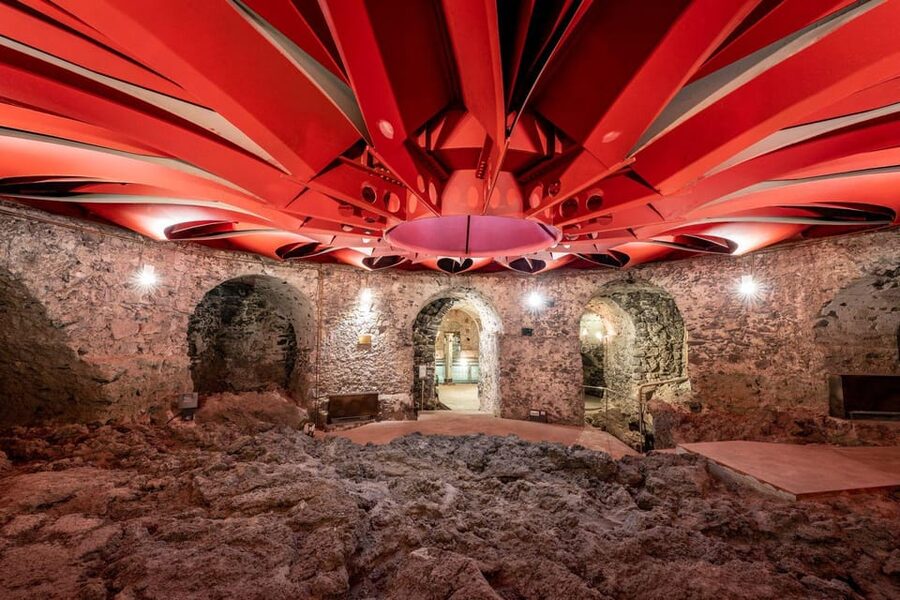
The tour is compact, but its value comes from the range of places it connects. In just over an hour, you can see the cloisters, library, Roman house, novices’ garden, kitchens, cellars and staircase, while hearing how the complex shifted from monastic use to university life. That is a lot of ground, both literal and historical.
The guide is central to the experience. The strongest tours balance facts with stories, answer questions, and keep the pace lively without turning the visit into a lecture. Carmen, Giovanni and Nicola are among the guides associated with this tour. Their styles may differ, but the qualities to look for are clear English, a good pace and room for questions.
The tour is conducted in English. If English is not your main language, written translations in French or Spanish can be provided. The experience is listed as wheelchair accessible, though no detailed information is provided about access at each individual stop. If you need specific access arrangements, check before booking rather than assuming every room has identical access.
One practical point: do not count on reaching a viewing platform. Access to that area may depend on the tour time, so treat it as an extra if available, not a promised part of the visit. The core route through the monastery remains worthwhile without it.
Is the $11 price good value?
At $11, the tour offers a strong return if you want more than a quick walk through a historic building. Admission is included, as is a live English-speaking guide, and the tour may open parts of the complex that are not normally accessible. Baggage storage is also available at the meeting point, a small but handy perk if you are carrying bags.
You could see some of the monastery’s spaces on your own, but the Roman house, the layered library and the building’s long restoration story make more sense with someone explaining them. The guide adds context that turns a sequence of rooms into a readable history of Catania.
The trade-off is depth. Seventy-five minutes is enough for a well-paced overview, not a slow, private exploration. If you want to spend an afternoon studying every architectural detail, you may wish to allow extra time around the tour to revisit areas that are open to you. If your schedule is tight, this is a focused way to get a meaningful introduction.
Who should book this tour?
I would put this tour high on the list for anyone interested in Catania’s architecture, archaeology or religious history. It also suits visitors who enjoy seeing how a historic site continues to function today. The university setting gives the monastery a living quality that a closed museum cannot offer.
It is a particularly good choice if you have limited time in the city and want one guided activity that covers several eras. The tour offers more than the monastery’s Baroque face: it takes you below the modern library, into historic service spaces and through areas tied to everyday monastic life.
If you prefer to wander at your own pace, or want long stretches for photography, the guided format may feel brisk. But at $11 and 75 minutes, the balance is sensible for most visitors. Book it if you want a clear, human-scale introduction to a building that is too large and layered to appreciate fully at a glance.
FAQ
How long is the tour?
The guided tour lasts 75 minutes.
How much does the tour cost?
The listed price is $11 per person.
What language is the tour in?
The live guided tour is in English.
Are written translations available?
Yes. Written translations in French or Spanish can be provided if English is not your main language.
Where does the tour start?
It starts at the Benedictine Monastery of San Nicolò l’Arena on Piazza Dante.
How do I find the meeting point?
Pass through the main gate on Piazza Dante. The information point is in the courtyard on your right.
Where does the tour finish?
The tour returns to the Benedictine Monastery of San Nicolò l’Arena.
What is included?
Access to the monastery, including parts not normally accessible, an English-speaking guide and baggage storage at the meeting point are included.
Is the tour wheelchair accessible?
Yes, the activity is listed as wheelchair accessible.
Can I cancel or pay later?
You can cancel up to 24 hours in advance for a full refund. Reserve now and pay later is also available.
Newest tours in Catania
- Typical Pottery Experience with local Artisans in Catania★ 5.0 · 15 reviews
- Catania AIRPORT transfer From / To Taormina★ 5.0 · 3 reviews
- Private Transfer from Taormina to Syracuse (Direct or with Stops)★ 5.0 · 12 reviews
- Private tour of Catania and the Riviera of the Cyclops★ 5.0 · 16 reviews
- Private Tour from Catania to Etna Naxos and Taormina★ 4.5 · 7 reviews
- Transfer Catania / Agrigento Airport★ 5.0 · 3 reviews
- Transfer Catania / Licata Airport★ 5.0 · 32 reviews
- Syracuse Ortigia and Noto Private Tour★ 5.0 · 40 reviews
Catania Tours, compared.

Mount Etna Morning or Sunset Day Trip with Tasting
Read our review →
Sunset Jeep Tour of Mount Etna and Lava Flow Caves
Read our review →
Etna and Alcantara Gorges Full-Day Tour with Lunch
Read our review →
Mt. Etna and Taormina village full day tour from Catania
Read our review →
Amazing Etna Morning Tour with Pickup and Drop-Off
Read our review →Browse the lists this tour appears in