
Reviewed · BIKE TOURS IN SICILY
Discover Trapani’s Saltpans with an E-Bike Tour
Trapani’s saltpans offer a rare pairing: a ride through a protected wetland where flamingos and other birds may be spotted, followed by a visit that explains how salt has shaped this part of Sicily for nearly 3,000 years. The three-hour outing starts and ends at Trapaninside, on Via Osorio, 10.
I like two things in particular: the small group, capped at eight, leaves room for a more personal pace, and guide Massimo Baudo’s clear English explanations connect the birdlife to the working salt industry. The museum visit ends with a taste of salt produced there, a pleasingly tangible finish.
One consideration: the cycling is not all on quiet paths. The route includes road riding, so if you have a car and are mainly interested in the saltworks, you could visit the area without booking the bike tour. The ride still adds a pleasant way to see it, but the guide’s interpretation is the strongest reason to join.
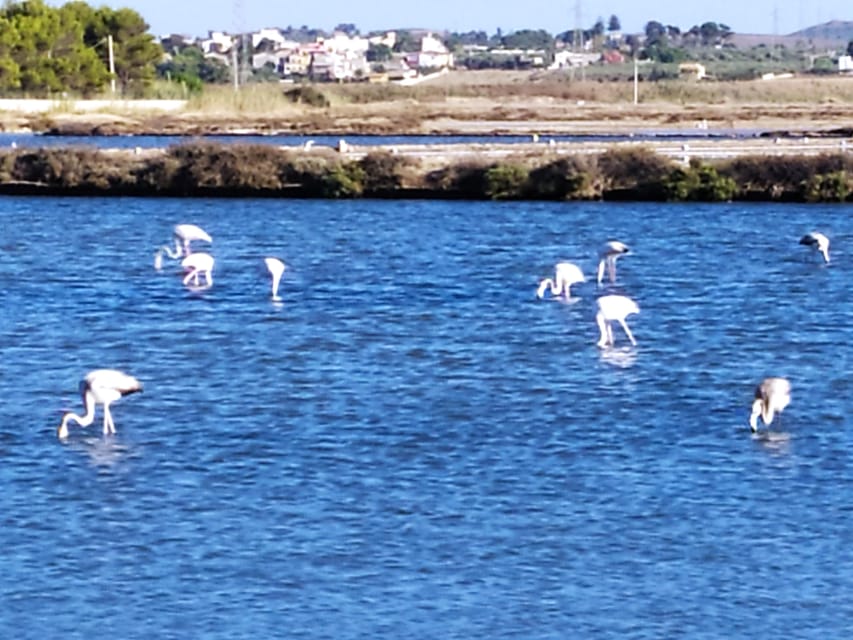
- Protected salt reserve: Watch for flamingos, herons, avocets, plovers and other birdlife.
- A working salt tradition: The Nubia museum is managed by a family of salt workers.
- A compact three-hour outing: The tour combines cycling, scenic stops and a 45-minute museum visit.
- A small group: No more than eight participants join the ride.
- A local taste: Sample salt produced at the saltworks at the end of the tour.
Riding through Trapani’s salt reserve
The tour begins at Trapaninside, the tourist service office at Via Osorio, 10. Arrive about ten minutes early. You need time to try the e-bike size, and the group departs on schedule, so a last-minute arrival can make the start feel rushed.
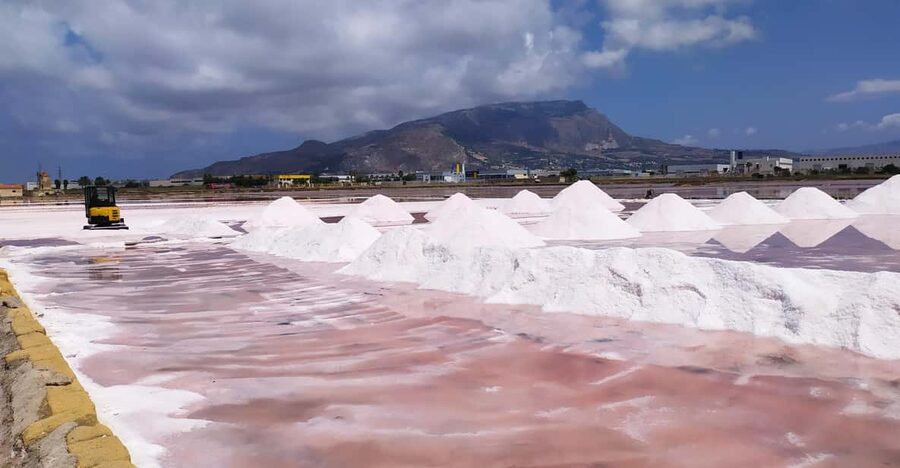
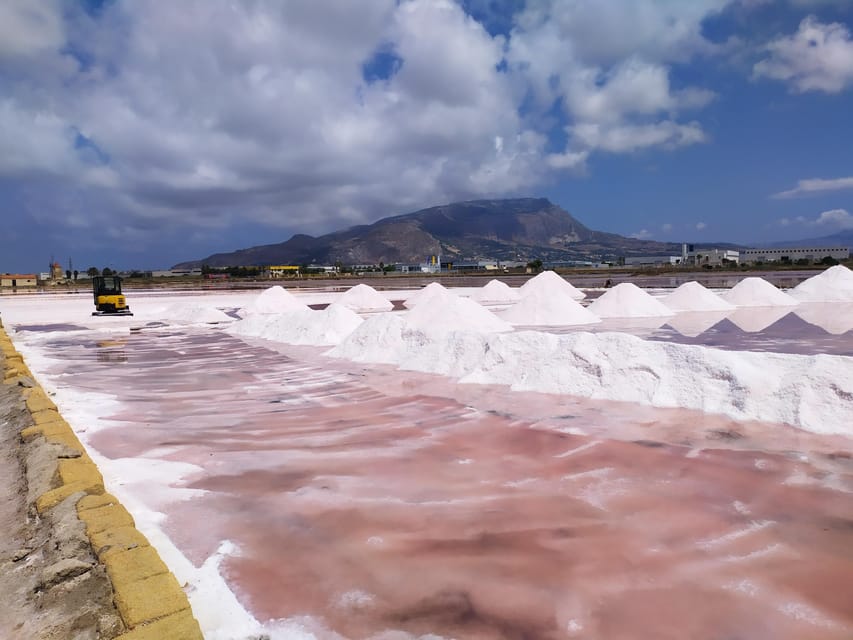
From there, the ride heads toward the Natural Reserve of Saline. The first part includes about 30 minutes of electric-bike riding, followed by roughly 30 minutes of scenic views along the way. The route takes you into a salt-producing area that also serves as a habitat for protected animals.
That combination is what makes this outing more than a simple bike rental. The saltpans are working places as well as natural ones, and moving through them by bike gives you time to notice both. Keep an eye out for pink flamingos, herons, avocets and plovers. Wildlife sightings are never something a tour can promise, but these are among the species that live in the reserve.
An e-bike helps keep the ride within reach for people who do not want a strenuous outing. The tour is described as a healthy activity, but it is still a bike tour, and you will be riding on roads for at least part of it. If you are comfortable cycling and want fresh air between museum visits, that is a useful middle ground. If you prefer not to cycle, the ride itself may not justify the cost for you.
The exact route details and cycling distance are not specified, so I would not book this expecting a long, technical ride or a dedicated off-road adventure. Think of it instead as a gentle way to reach the saltpans, take in the views and hear how the natural reserve and salt industry fit together.
Saltpans, windmills and the late-day light
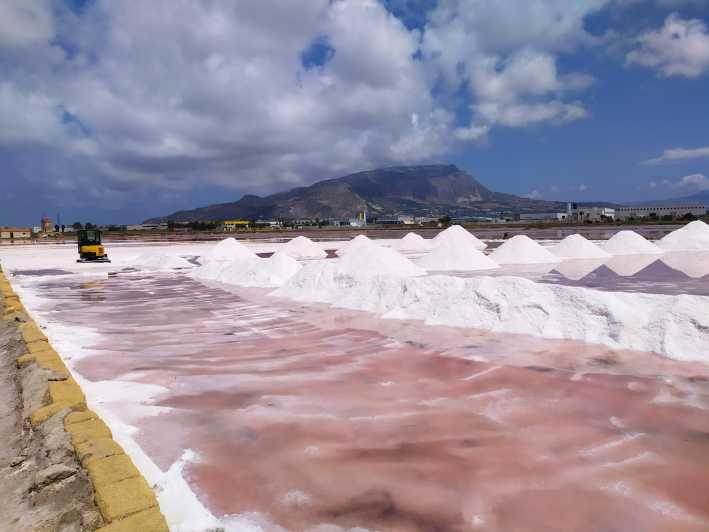
The saltworks are the visual heart of the outing. The overview highlights windmills and broad views across the saltpans, while the tour’s timing can place you there in the afternoon or evening light. The light matters: one participant described the timing as ideal, with the saltpans looking especially beautiful in the late-day sun.
Starting times vary, so check availability before booking rather than assuming every departure is timed for sunset. If you have a choice, an afternoon or early-evening slot may suit you if the light is a priority. The experience lists a beautiful sunset as a highlight, but the tour does not promise that every departure will include sunset conditions.
There is a practical distinction worth keeping in mind. The scenery is a strong reason to go, but the bike ride uses roads, according to one detailed account of the route. If you already have a car, you may be able to see the area independently. What you would miss is the guided context and the easy transition from the reserve to the museum.
The small group helps here. With a maximum of eight participants, the guide can speak to a compact group rather than a crowd. That matters when you are riding and stopping to look at the area, though you should still expect to follow the group’s pace and departure time.
More Bike Tours in Sicily
- Palermo: Guided Bike Tour with Street Food Tasting
★ 4.8 · 479 reviews - Rent road bike
★ 5.0 · 118 reviews - Bike tour of the historic center of Palermo with tasting
★ 5.0 · 91 reviews
Understanding salt at the Nubia museum
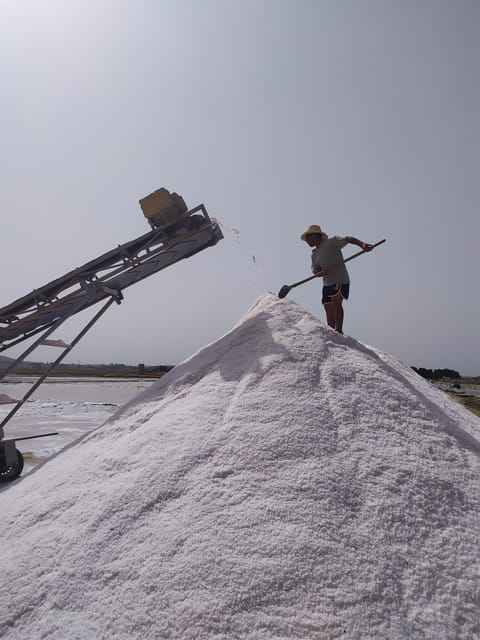
The second half of the tour turns from habitat to human history. At the Salt Museum in Nubia, you spend about 45 minutes learning why salt has mattered to Trapani’s economy for nearly three millennia. The museum is managed by a family of salt workers, so the story is tied to people who know the work directly, not just to objects on display.
Salt can seem like an ordinary kitchen staple until you see how much labour and local knowledge sit behind it. Here, the museum gives the saltpans a longer frame: this is not scenery arranged for visitors, but part of an industry that has helped shape the territory over generations. The guide’s explanations are a key part of the visit. Massimo Baudo is praised for speaking clear English and for explaining both the history and the operation of the saltworks.
That kind of interpretation is especially valuable if you are visiting the saltpans by car or on your own. You can take in the view without a guide, but it is harder to understand what the saltworks mean to the local economy and how the process connects to the area’s past. The museum visit provides that context in a manageable block of time.
The tour ends with a taste of salt produced there. It is a small detail, but a good one: rather than leaving with only a few photos, you get to connect the place to a product you can taste. The included museum ticket makes this an integrated stop rather than an extra errand to arrange yourself.
How the three hours are spent
The planned outing lasts three hours, but the listed segments account for less than that: around 30 minutes of e-bike riding, 30 minutes of scenic views and 45 minutes at the museum. The rest of the schedule includes getting started, moving between parts of the visit and returning to the meeting point. The precise breakdown is not stated, so allow the full three hours rather than trying to fit a tight plan around an assumed finish time.
The route returns to Via Osorio, 10, which is convenient if you are organizing the day around a single starting point. The tour includes the e-bike, a bottle of water, the museum ticket and a tour leader. No other exclusions are listed.
Languages are Italian and English. If you need the tour in English, confirm the available departure when you check times. A small group of no more than eight is a good fit if you prefer to ask questions, but it also means you should arrive on time: the guide needs to size bikes and get everyone moving together.
Is $67.97 good value?
At $67.97 per person, this is not simply a three-hour bike hire. The price covers an e-bike, a tour leader, water and entry to the Salt Museum, with the ride and guided explanations joining the natural reserve to the salt-making tradition. If you value local context and prefer to have the practical pieces arranged, that bundle makes sense.
The value is less clear if you only want to see the saltpans. With a car, you may be able to reach the area without paying for a guided ride, and the tour’s cycling route includes roads. In that case, ask yourself whether the museum explanation, the company of a small group and the guided route are worth the added cost. For many people, the answer will depend on how much they enjoy learning the story behind a place.
The five available ratings average 4.8 out of 5, though that is a small pool. The strongest points are specific rather than vague: Massimo is described as friendly, his English explanations are clear, and the afternoon light can make the saltworks particularly beautiful. Those are useful signs of what the tour does well, but they do not remove the road-riding consideration.
More e-bike rides in Trapani:
- Bike tour of Catania by e-bike
★ 5.0 · 9 reviews - Scala Dei Turchi: E-BIKE TOUR Hidden Beaches, Sea, Relaxation [+SNORKELING ]
★ 5.0 · 5 reviews - Mount Etna Summit E-Bike
★ 5.0 · 4 reviews - E-BIKE TOUR AGRIGENTO: Valley of the Temples & Old Town with meal included
★ 5.0 · 4 reviews
Who should book this Trapani bike tour?
I would put this tour high on the list if you like gentle outdoor activities, want to learn about the local salt industry, and would enjoy looking for birds along the way. It is also a good choice if you value a guide who can connect the setting to its history, rather than simply pointing out the views.
It may suit couples, solo visitors and small parties who are comfortable cycling and can keep to a set departure time. The eight-person limit keeps the group small, while the three-hour duration leaves room for another activity later in the day.
I would think twice if you do not want to ride on roads, have limited time, or mainly want a self-directed look at the saltpans. The outing’s strongest value is the combination: the reserve, Massimo’s explanations, the family-run museum and a taste of local salt. If those pieces appeal, the ride is a practical way to bring them together.
For flexible planning, you can reserve now and pay later, and cancellation up to 24 hours before departure is eligible for a full refund. Check the available starting times, especially if late-day light matters to you, and arrive ten minutes early to try the bike before the group sets off.
FAQ
How long is the Trapani saltpans e-bike tour?
The activity lasts three hours. The schedule includes about 30 minutes of electric-bike riding, 30 minutes of scenic views and a 45-minute visit to the Salt Museum.
Where does the tour start and finish?
It starts at Trapaninside, the tourist service at Via Osorio, 10, and returns to the same meeting point.
Which languages are available?
The tour is offered in Italian and English. Check the available departure times for the language you need.
What is included in the price?
The price includes the e-bike, a bottle of water, the Salt Museum ticket and a tour leader.
How many people are in the group?
The group is limited to eight participants.
What animals might I see in the reserve?
The reserve is habitat for protected species including pink flamingos, herons, avocets and plovers. Sightings are not guaranteed.
Do I need to arrive early?
Yes. Arrive about ten minutes before departure so you can try the bike size. The tour leaves on time.
Newest tours in Trapani
- From Trapani: Favignana and Levanzo Boat Tour★ 3.9 · 27 reviews
- Segesta and Selinunte full day tour from Trapani★ 3.8 · 5 reviews
- Oil & Wine Tasting★ 5.0 · 21 reviews
- From Trapani: Favignana and Levanzo Motorboat Cruise★ 4.7 · 5 reviews
- From Trapani: Favignana and Levanzo full-day tour with lunch and aperitif★ 5.0 · 3 reviews
- From Trapani: Full-Day Sailboat Trip to Favignana & Levanzo★ 4.9 · 15 reviews
- Da Trapani: Escursione alle isole Egadi Favignana & Levanzo★ 4.9 · 7 reviews
- Favignana and Levanzo with Elisabetta II★ 4.4 · 15 reviews
Bike Tours in Sicily, compared.

Bike tour of the historic center of Palermo with tasting
Read our review →
Historic Center Guided Bike Tour with Food Tasting
Read our review →



Browse the lists this tour appears in