
Reviewed · MARSALA SALT PANS TOURS
Guided tour of the salt pans of Trapani and the Salt Museum
Trapani’s salt pans make an everyday ingredient feel anything but ordinary. On this 75-minute tour, you follow the route from seawater to salt, walking beside shallow ponds where water mirrors the sky and the salt takes shape in the sun.
I like two things in particular: you see the working process up close, including the chance to collect salt by hand, and the museum ties that work to a family tradition inside an old baglio. One thing to plan for: the salt pans are outside central Trapani, and transport is not included.
At a glance
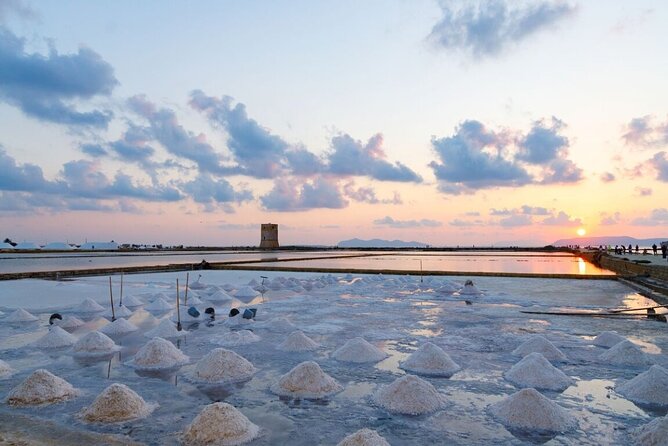
- Walk the Culcasi salt pans: A 50-minute route through the Trapani and Paceco nature reserve follows the edge of the ponds.
- See salt form in the ponds: Your guide explains the steps from seawater to salt, and you can gather some by hand.
- Visit an old mill and museum: The 25-minute indoor portion explores salt-making tools and the history of the family that runs the pans.
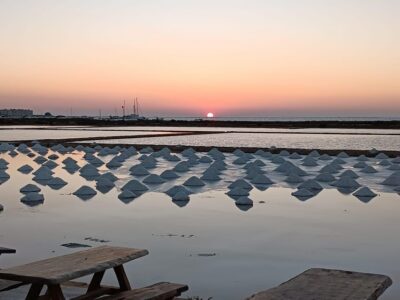
- Look for reflections and color: White salt, blue sea, gray clay, and pink-toned ponds make the setting part of the lesson.
- Plan your own ride: The meeting point is outside Trapani, with no city public transport serving the location.
- Consider a later tour: A visit around 6 p.m. may give you time to watch the sunset afterward, though the exact light and sunset depend on the day.
A working salt farm, not just a pretty view

Salt-making here is not a display built for a quick photo. The Culcasi pans are an active operation within the Riserva Naturale Saline di Trapani e Paceco, a protected area for plants and birds. The tour shows you how the sea’s water is guided through a series of pans until salt forms and can be collected.
That practical focus is what makes the visit worthwhile. You are not only looking at pink and white ponds; you are learning how their arrangement and the work of salt farming turn seawater into a familiar product. The guide walks you through the stages and explains the process in English.
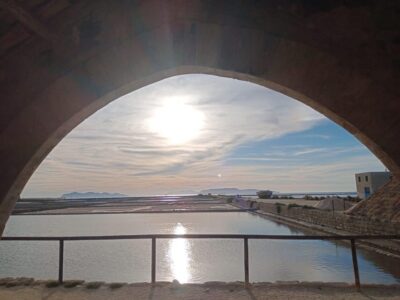
The walk is described as suitable for all age groups, and most people can participate. It lasts about 50 minutes, so it is a manageable outing rather than a long hike. The path follows the perimeter of the salt pans and reaches the banks where water reflects the sky. Expect an open-air visit, with much of the appeal coming from the ponds, the salt, and the changing light.
I would bring sun protection and comfortable walking shoes as sensible basics for an outdoor visit, though the tour information does not specify facilities or the exact ground surface. If the weather turns poor, the activity may be canceled, with another date or a full refund offered.
More salt pan visits in Sicily:
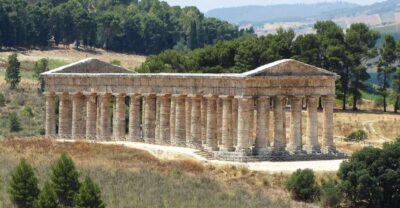
- Segesta, Erice and Salt Pans Full-Day Excursion from Palermo
★ 4.2 · 1,791 reviews - Guided tour of the Trapani Salt Pans and Salt Museum
★ 4.7 · 423 reviews - Trapani: 2-Hour Salt Flats Tour
★ 4.9 · 286 reviews
Reading the colors of the ponds
The salt pans have a palette that shifts from one pond to the next: white salt, blue sea, gray clay, and pink tones in the tanks. That variety makes the walk more than a technical demonstration. The colors help you notice that each pond has a role in the process, while the reflective water makes the sky part of the view.
This is also a place where the season can affect what you see. One visitor who found the museum and walk worthwhile wished to return at another time of year to see the pans under different conditions. That is a useful expectation to set: the salt-making process is the constant, but the appearance of the ponds can vary.
If you enjoy photography, the reflective banks and sunset light may be a draw. A later visit, around 6 p.m., has been recommended for those hoping to stay and watch the sun go down. That is a tip, not a guarantee of a sunset view on every date, so check the available tour time and sunset conditions before you plan your evening around it.
Collecting salt by hand
The most tactile moment comes when your guide shows you the salt forming in the pans. You can collect it by hand and follow the stages that bring it from seawater to the salt you use at home. That small act gives the explanation a useful anchor. Instead of hearing about production in the abstract, you can see and handle part of the result.
The tour also connects the salt pans to the broader history of the area. Salt and sea have long been linked here, and the production method is still described as being carried out as in the past. That does not mean every historical detail is spelled out in the tour information, but the guide’s account gives the working site a human story as well as a practical one.
Some tours include a small salt tasting. The tasting is not the main event, and details about the particular salt or tasting format are not specified. Still, it rounds out the visit neatly: you see where the salt takes shape, learn how it is made, and get a chance to taste it.
Inside the 15th-century mill and Salt Museum
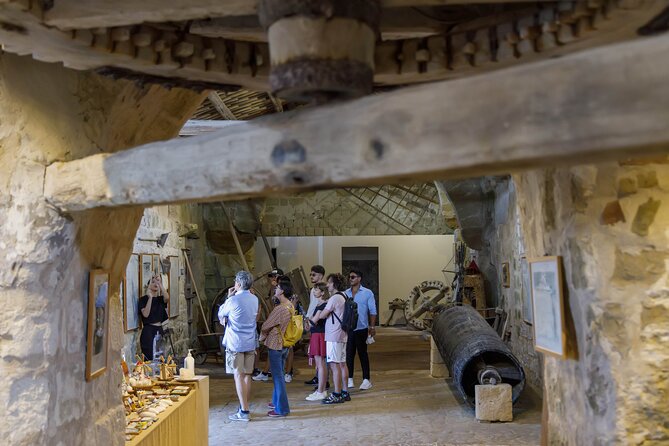
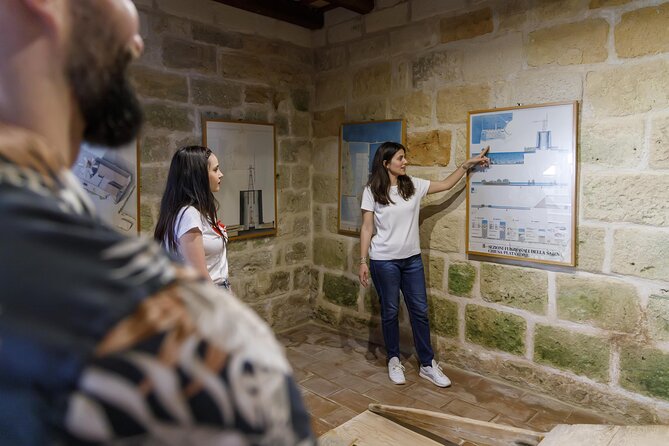
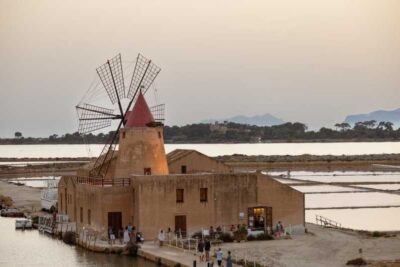
The second part moves indoors to the Museo del Sale, housed in an ancient baglio, a traditional enclosed farmstead. The museum visit lasts about 25 minutes and includes an ancient mill dating to the 1400s. Its tools make the physical work of salt production easier to imagine, while the guide explains the history of the salt pans and the family that has run them across generations.
This family connection is a useful part of the story. The visit is not only about a technique from the past; it also shows how a local enterprise has kept that work going. The museum is included in the official guide of the European Union, and it serves as a record of the bond between salt and the sea in this part of Sicily.
The indoor portion may feel less striking than the walk itself if you prefer open-air scenery. The museum is small, and the strongest part for many people is the chance to see the tools and hear how the work was done. If other groups are present, it may also be harder to hear a guide in the museum. One account described that problem, while noting that the outdoor explanation was easier to follow.
English tours are offered, but English-language time slots can be infrequent. Guide delivery may vary: one account found one guide’s English easy to follow and another guide’s accent harder to understand. I would book an English slot if you need one, and keep in mind that the quality of spoken explanation can depend on the guide on the day. No guide names are provided.
More museum visits in Sicily:
- Tile Museum – Majolica Museum – Rooms at the Genius
★ 5.0 · 85 reviews - Enchanted Castle of Sciacca – Museum Tickets
★ 3.5 · 63 reviews - Syracuse: Museum Guided Tour with Sicilian Puppet show
★ 4.1 · 27 reviews - Tecnoparco Archimede Museum Exhibition Ticket
★ 4.8 · 14 reviews
What the $21.77 price gets you
At $21.77 per person, the price covers a guided visit to both the salt pans and museum, with admission included. For a 75-minute tour, that is a reasonable way to get context you would miss by simply driving past the ponds. You have a guide to explain the production sequence, a chance to handle salt, and access to the museum and old mill.
The value depends partly on what you want from the stop. If you are curious about food production, local history, or traditional work, the tour gives you a compact lesson with a scenic setting. If you only want a quick photo of the ponds, the guided format and museum may be more than you need.
The larger cost to consider is getting there. The meeting point is at Via Salina Chiusa, 1, in Paceco, and the activity ends back there. The salt pans are about a 15-minute drive from downtown Trapani, according to one account, and city public transport does not reach the site. A taxi can add a substantial expense: one person paid €60 for a round trip. The tour provider does not offer or arrange transport, so check your ride before booking rather than assuming the ticket includes a transfer.
The activity is private, meaning only your group participates in the tour. That can make the outdoor explanations easier to follow and gives your own party the guide’s attention. It does not necessarily mean the museum will be empty or that no other groups will be on site.
Timing, access, and who should book
The full visit is about 75 minutes: 50 minutes among the pans and 25 minutes in the museum. The pace is short enough to fit around other plans in the Trapani area, but leave time for the ride to and from Paceco. The meeting point and the end point are the same.
This tour suits you best if you have a car, have arranged a taxi, or are already staying close to the salt pans. It is also a good fit for families and mixed-age groups who want a short, hands-on outing rather than a strenuous nature walk. Service animals are allowed, and most people can participate.
It may be a poor fit if you are relying on public transport from Trapani and have no transport plan. The tour itself is affordable, but the extra ride could cost more than the admission. It is also worth checking the English tour schedule early, since English slots are not always frequent. On average, people book about 10 days ahead.
Weather matters because this is partly an outdoor activity. If poor conditions force a cancellation, you can be offered a different date or a full refund. You can also cancel for a full refund up to 24 hours before the start time; cancellations made later are not refunded.
Should you book the Trapani salt pans tour?
Book it if you want to understand how salt is made here, enjoy a short walk through a working salt farm, and have a ride to Paceco sorted out. The strongest combination is the hands-on look at salt forming in the ponds and the family history presented in the old mill and museum.
Skip it, or arrange transport before paying, if you expect to get there by public bus from central Trapani. And if you are choosing a time, consider a later slot if you hope to see sunset light over the ponds. The tour is brief, focused, and fairly priced; the transport question is the detail most likely to shape whether it feels like good value.
FAQ

How long does the tour last?
The tour lasts about 1 hour and 15 minutes. The salt pan walk takes about 50 minutes, followed by about 25 minutes in the Salt Museum.
Is the tour offered in English?
Yes. The tour is offered in English, though English-language time slots can be infrequent.
Is the tour private?
Yes. It is a private activity, so only your group participates in the tour.
Where does the tour start and end?
It starts at Via Salina Chiusa, 1, in Paceco, and ends back at the meeting point.
Is transport from Trapani included?
No. Transport is not included or arranged, and city public transport does not serve the location. You need to arrange your own ride.
Can I cancel for a refund?
You can cancel up to 24 hours before the start time for a full refund. If poor weather cancels the tour, you will be offered another date or a full refund.
Newest tours in Sicily
- Private Godfather Tour with Sicilian Cannoli Tasting★ 5.0 · 15 reviews
- Messina Shore Excursion: Private Tour Tindari, Milazzo And Messina★ 5.0 · 4 reviews
- From Messina Cruise Terminal: Private Godfather tour + Lunch★ 5.0 · 29 reviews
- Messina, Group Tour For Etna and Taormina Cruisers★ 5.0 · 15 reviews
- Taormina: Private/Guided Godfather with Authentic Pizza Tasting★ 5.0 · 5 reviews
- Private Taormina White Lotus luxury experience★ 5.0 · 4 reviews
- Etna Alcantara tour: the majestic lava landscape★ 4.5 · 13 reviews
- Half Day Private Tour to Messina Taormina and Castelmola★ 5.0 · 33 reviews
Marsala Salt Pans Tours, compared.

Segesta, Erice and Salt Pans Full-Day Excursion from Palermo
Read our review →
Guided tour of the Trapani Salt Pans and Salt Museum
Read our review →

Browse the lists this tour appears in