
Reviewed · ORTIGIA TOURS
Syracuse: Highlights of Ortigia Guided Walking Tour
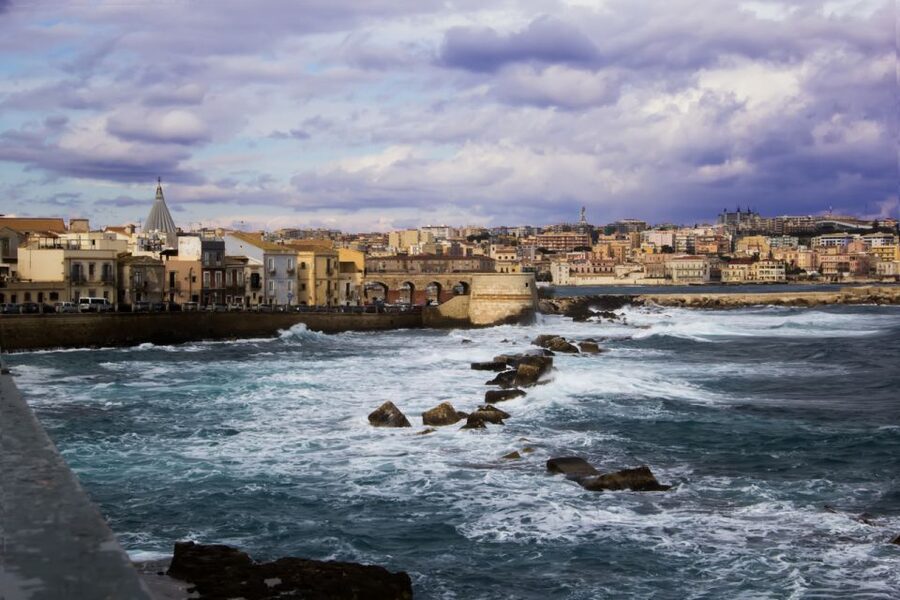
Ortigia’s ancient Greek temple, grand Cathedral square and freshwater spring sit close enough to link on foot, but their stories stretch across centuries. This two-hour walk gives you a guide to connect the layers, from the Temple of Apollo to the myth of Arethusa and Alpheus.
I like the route’s clear mix of major landmarks and local lore, and I like that the guides have been praised for answering questions and explaining the city beyond a list of dates. Michael has even adjusted the pace and route to find shade during a heatwave.
One point to weigh: the tour may run in English and Italian at the same time, which can slow the pace. Cathedral entry costs extra, and opening hours or holidays may change what you see inside.
- Temple of Apollo first: Start at one of the oldest Greek temples in the Western world.
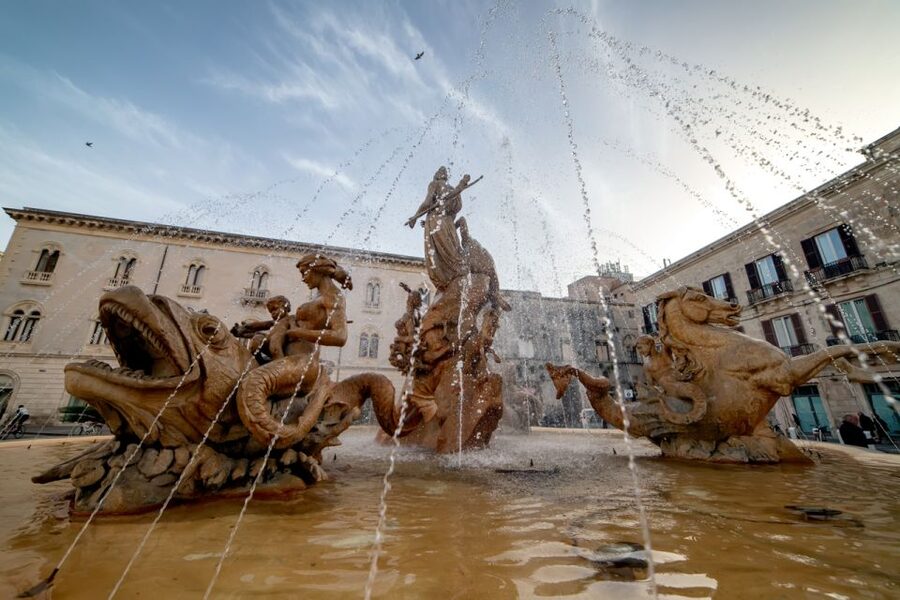
- Piazza Archimede’s Fountain of Diana: See Arethusa’s myth represented in the heart of Ortigia.
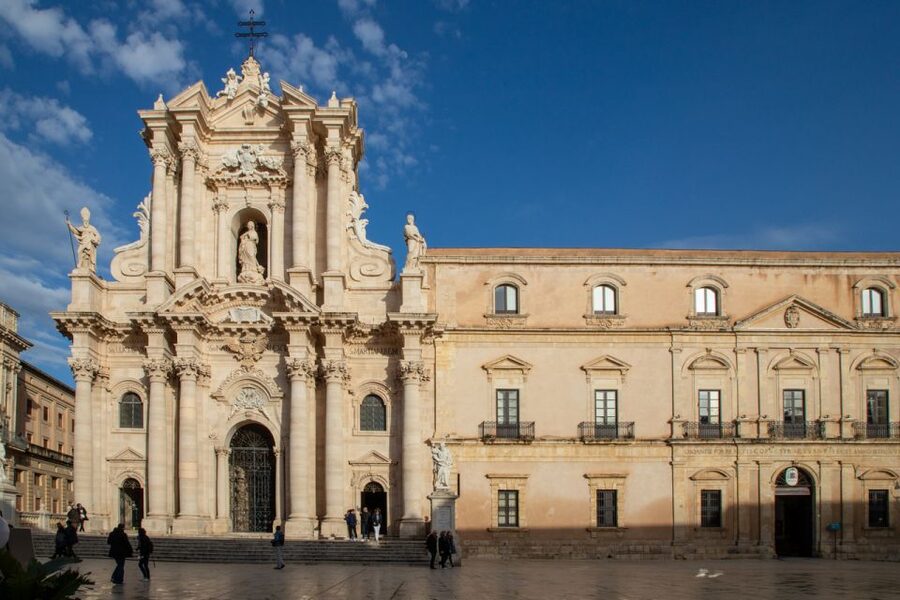
- Piazza Duomo and the Cathedral: Take in the marble architecture, with entry tickets separate.
- Arethusa Spring at the finish: See freshwater close to the sea and hear the story of Arethusa and Alpheus.
- Local guides bring the context: Past guides have included Giuseppe, Michael, Letizia, Vincenzo and Eva. Names and tour language may vary.
- Plan for possible adjustments: The Cathedral visit depends on opening hours, and the stated stop timings do not neatly fit the advertised two hours.
Ortigia’s landmarks make a compact history lesson
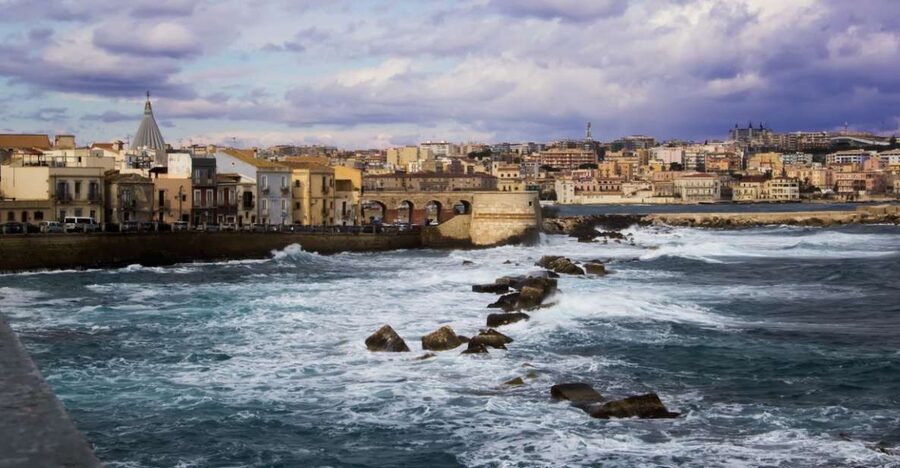
Ortigia is the small island at the heart of Syracuse, and this walk uses its most recognizable sights to tell a city-sized story. You begin near the Temple of Apollo, move through Piazza Archimede and Piazza Duomo, then finish by the Arethusa spring. The route is appealing if you want orientation and context before exploring on your own.
The tour costs $29 per person and lasts about two hours. For that price, you get a guide and a sequence of major sights without paying for transport between them. The value is strongest if you want someone to explain how Greek myth, architecture and local history connect. If you prefer to wander quietly or spend a long time at each monument, a guided schedule may feel brisk.
Past guides have been called Giuseppe, Michael, Letizia, Vincenzo and Eva. Those names show the range of people who have led the walk, not a promise about who will guide your departure. The most useful qualities described include clear explanations, thoughtful answers and a friendly manner. One guide, Michael, was also careful about finding shade during a spell of 96-degree heat. That kind of practical judgment can make a real difference in a sunny Sicilian afternoon.
Starting beneath the pomegranate tree
Meet at Largo XXV Luglio, 7, under the pomegranate tree in front of the Temple of Apollo, at the roundabout where Corso Matteotti begins. Look for a guide wearing a badge, and arrive 10 minutes early. That buffer matters: the tour asks the group to keep to its schedule, and waiting for late arrivals has been a source of frustration.
The starting point puts you right beside the first stop, rather than requiring a separate transfer across Syracuse. It also makes the ancient temple an immediate introduction to Ortigia’s long past. You can check available departure times when booking, as the activity’s schedule varies.
The tour is offered in English and Italian. Be aware that a group may be guided in both languages at once. When explanations are repeated, the pace can feel slower, especially if you have only two hours. If you need a single-language tour, check the language arrangement before you commit rather than assuming every departure is monolingual.
More Walking Tours in Sicily
- Syracuse: Street Food Walking Tour in Ortigia with Tastings
★ 4.9 · 293 reviews - Syracuse: Ortigia and Neapolis Guided Walking Tour
★ 4.7 · 205 reviews - Syracuse: Ortigia Private Walking Tour
★ 4.8 · 181 reviews
The Temple of Apollo sets the historical scene
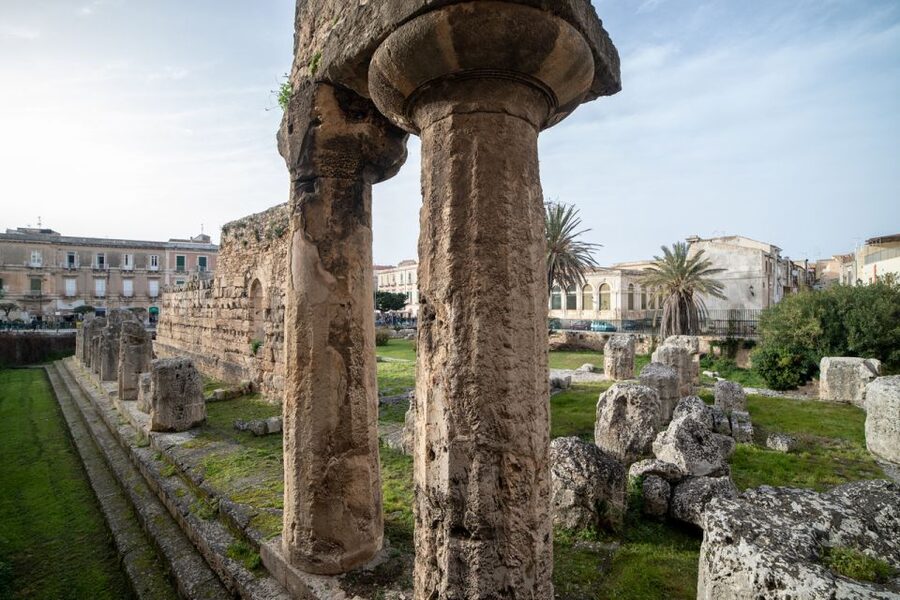
The first stop is the Temple of Apollo, described as the oldest Greek temple in the Western world. You have around 30 minutes allocated here, including the guided explanation. That is enough time to get the landmark’s place in the story, though it is not a long archaeological visit.
The advantage of starting here is simple: you see a major ancient site before the route moves into Ortigia’s later civic and religious centers. A guide can help you read the remains as more than an old structure and put them in the context of Syracuse’s Greek beginnings. If ancient architecture is your main interest, you may want to return later for a slower look.
This is a walking tour, not a museum visit with a long indoor component. The value comes from the guide’s interpretation and the way each stop builds on the last. Guides have been praised for going beyond dates and answering questions, so do ask when something sparks your curiosity.
Piazza Archimede turns myth into public art
From the temple, the walk continues to Piazza Archimede, where the Fountain of Diana gives the tour a more visual way into Greek mythology. The fountain is linked to the story of the nymph Arethusa and the goddess Artemis, shown at the moment Arethusa becomes a spring.
Around 20 minutes are set aside for this stop. That gives you time to look closely and hear the story, rather than simply passing through the square. The myth matters again at the end of the walk, so this is a useful point of connection: the fountain introduces a tale that will make the Arethusa spring feel less like a scenic water feature and more like the closing chapter of a local legend.
The square also provides a change of pace from the temple. You are not just moving through a sequence of ancient remains; the route uses sculpture and public space to show how stories stay present in the city. If you enjoy mythology, this stop may be one of the most memorable. If you are more interested in architectural detail, ask your guide to point out what to notice in the fountain itself.
Piazza Duomo brings the city’s layers together
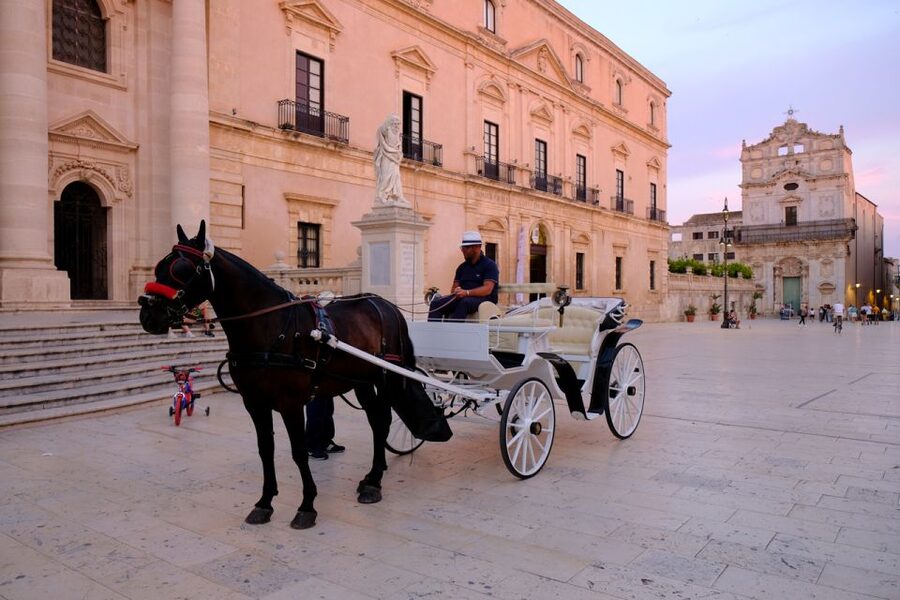
The next major stop is Piazza Duomo, a handsome square associated with the first Corinthian settlers of Syracuse. The walk gives this part of the route the largest listed block of time, about 45 minutes, and includes a visit to the Syracuse Cathedral when conditions allow.
The Cathedral is the practical detail to plan around. Entry is not included in the tour price, and the monument visit may change because of holidays or opening hours. The tour information says tickets must be paid for on-site, so bring a way to cover any separate entry cost. A dress code applies for places of worship; dress respectfully if you want to enter.
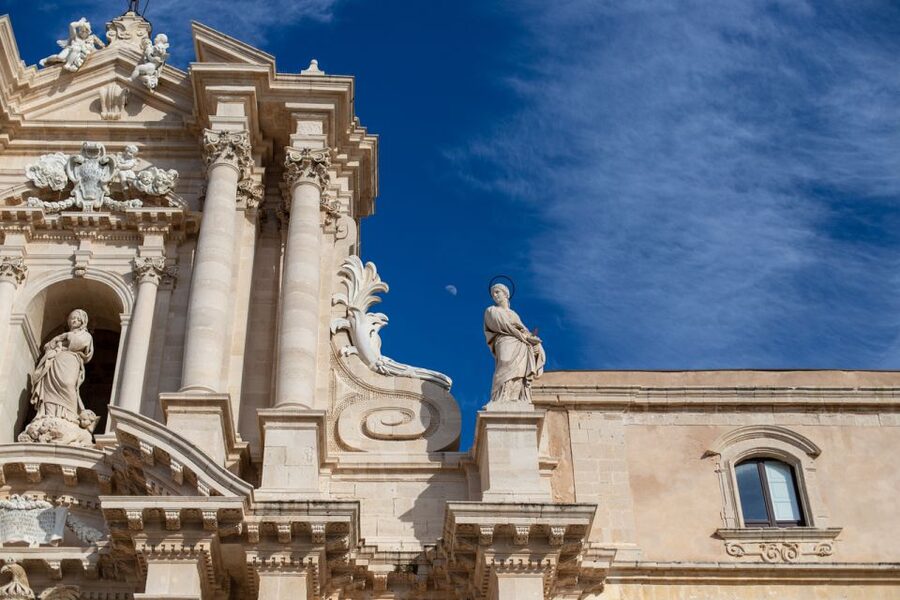
The square’s marble work and the Cathedral’s architecture are central reasons to take the route with a guide. Rather than treating the piazza as a quick photo stop, the walk gives you time to hear why it matters and to look around. One caution: the stated 45-minute block does not clarify exactly how much is guided explanation, Cathedral time or movement between locations. Access may also depend on the day.
More Ortigia tours in Syracuse:
- Siracusa: Ortigia Boat Tour with Marine Grotto
★ 4.7 · 617 reviews - Siracusa: Ortigia & Sea Caves Speedboat Tour with Swim Stop
★ 4.9 · 499 reviews - Syracuse: Pillirina, Ortigia, and Sea Caves Tour by Boat
★ 4.6 · 348 reviews - Syracuse: Ortigia Island and Sea Caves Boat Tour with Drinks
★ 4.6 · 337 reviews
Arethusa Spring closes the route with a love story
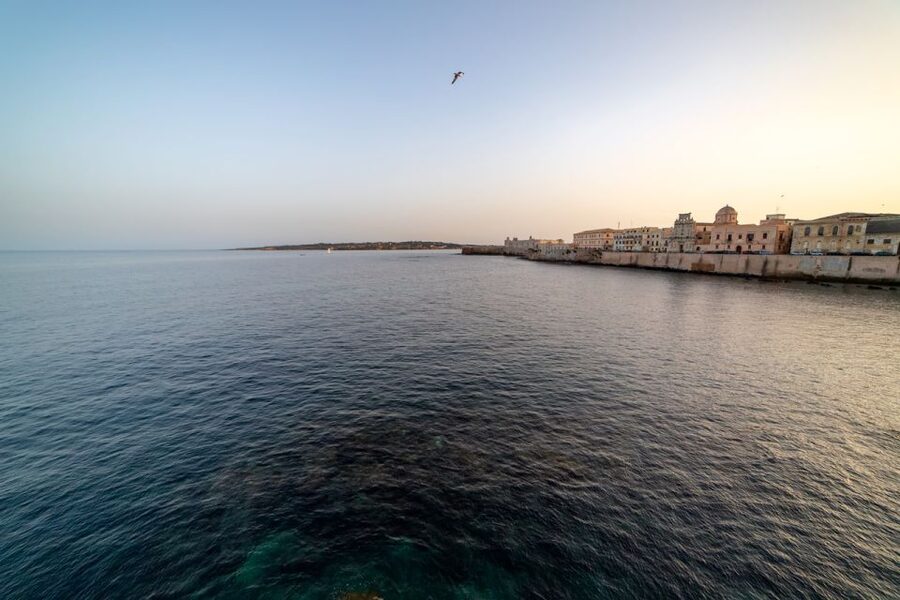
The final stop is Arethusa Spring, a freshwater source only a few meters from the sea. The route sets aside around 40 minutes here, making it the longest individual stop listed. It is an unusual setting for a city walk: water emerges close to the coast, and the place is tied to the story of Arethusa and Alpheus.
That myth gives the tour a satisfying finish. You have already seen Arethusa represented at the Fountain of Diana, and now you reach the spring associated with her name. The guide can connect the two versions of the story and explain why the spring has held a place in Syracuse’s imagination.
The spring is also a quieter counterpoint to the Cathedral square. If the route has moved quickly through architecture and history, this stop offers time to take in the setting and ask questions. Its appeal depends partly on what you enjoy: the story and its link to the landscape are the point, rather than a large monument or a long indoor visit.
Two hours needs a little flexibility
The activity is advertised as two hours, but the stated stop allocations are 30 minutes at the Temple of Apollo, 20 minutes in Piazza Archimede, 45 minutes at the Cathedral-area stop and 40 minutes at Arethusa Spring. Those add up to 135 minutes, before accounting for walking. The exact pacing may vary, and one account of a tour described a shorter visit, so treat the two-hour duration as a guide rather than a guarantee of precisely how long each stop will last.
This is worth noting if you have a tight schedule afterward. The walk itself is compact, but explanations, questions, Cathedral access and a bilingual format can affect the pace. I would avoid scheduling an important reservation immediately after the advertised finish.
Heat is another consideration, particularly in summer. One guide has been praised for keeping the group in the shade during extreme heat, but that is not something every departure can guarantee. Bring water and dress for the conditions. If you visit a place of worship, remember the required dress code.
You may use your own headset or buy a disposable one on-site for €1. The equipment has not always been ideal, so bringing a personal headset is a sensible option if you already use one. There is no food or drink included.
Who gets the most from this walk
This tour suits a first-time visitor who wants a clear introduction to Ortigia’s best-known historical sights without arranging several separate visits. It is also a good fit if you like hearing local stories, asking questions and getting a guide’s explanation of what you are seeing. Past guides have been praised for friendliness and for covering both history and architecture, while some have included local lore that gives the walk a less formal feel.
It may be less suitable if you want a strictly English-only experience, dislike a guided pace, or expect Cathedral admission to be part of the fee. The bilingual arrangement can mean repeated explanations, and the Cathedral ticket is extra. If your main goal is to spend a long time inside the Cathedral or linger at every landmark, plan a separate visit as well.
At $29, the price is reasonable for a two-hour guided route across four major stops, especially if you value interpretation more than simply finding the sights. You are paying for a local guide, not entries, food or drinks. The strongest return is the context: myths recur across the route, and a guide can tie together places that might otherwise seem like unrelated stops.
Should you book the Ortigia walking tour?
Book it if you want an easy introduction to Ortigia, appreciate history and mythology, and are comfortable with a schedule that may shift around opening hours or a bilingual group. The Temple of Apollo, Piazza Duomo and Arethusa Spring make a satisfying route, and the guide can turn familiar landmarks into a connected story.
Skip it if you need a guaranteed English-only departure, want to tour at your own pace or need a firm finish time. Check the language arrangement and Cathedral access before booking, arrive 10 minutes early, and bring a headset if you have one. For a first look at Syracuse’s historic center, it is a worthwhile way to get your bearings.
FAQ
How long is the Ortigia walking tour?
The advertised duration is two hours. The listed stop times add up to 135 minutes, so the actual pacing may vary.
How much does the tour cost?
The listed price is $29 per person.
Where does the tour meet?
Meet at Largo XXV Luglio, 7, under the pomegranate tree in front of the Temple of Apollo, at the roundabout where Corso Matteotti starts. Look for a guide with a badge.
What languages are offered?
The live guide is available in English and Italian. A tour may be conducted in both languages at the same time.
Is Syracuse Cathedral entry included?
No. The Cathedral entry ticket is not included in the tour price. Monument visits can change based on holidays and opening hours.
What sights are included on the route?
The route includes the Temple of Apollo, Piazza Archimede and the Fountain of Diana, Piazza Duomo and the Syracuse Cathedral, and Arethusa Spring.
Is food or drink included?
No. Food and beverages are not included.
Can I bring my own headset?
Yes. You may use your own headset, or purchase a disposable one on-site for €1.
How early should I arrive?
Arrive 10 minutes before the tour begins. Participants are asked to be on time so the walk can keep to its schedule.
Can I cancel or pay later?
You can cancel up to 24 hours in advance for a full refund. The activity also offers a reserve-now, pay-later option.
Newest tours in Syracuse
- Tour of Syracuse by Ape Calessino★ 3.0 · 3 reviews
- Boat tour of the island of Ortigia and the sea caves★ 4.2 · 4 reviews
- Tecnoparco Archimede Museum Exhibition Ticket★ 4.8 · 14 reviews
- Syracuse:Snorkeling+Pillirina, Ortigia & sea caves boat tour★ 4.8 · 18 reviews
- From Taormina: Syracuse Tour with lunch in Food Market★ 4.9 · 12 reviews
- Syracuse: Sicilian Street Food Hands-On Cooking Class★ 4.9 · 38 reviews
- Syracuse: Sunset Aperitif Tour★ 4.4 · 4 reviews
- Syracuse :Private boat trip con Prosecco/Aperitivo★ 5.0 · 4 reviews
Ortigia Tours, compared.
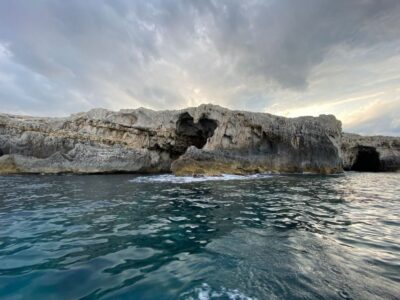
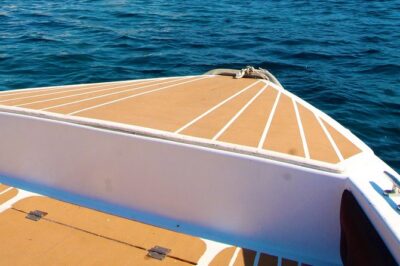
Tour of the island of Ortigia and exploration of sea caves with baths.
Read our review →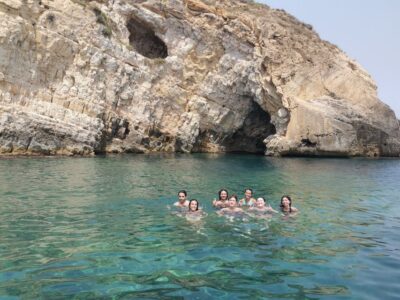
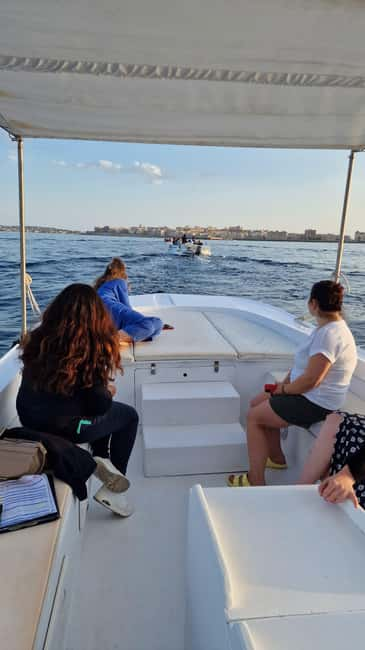
Ortigia & Sea Caves Speedboat Tour with Swim Stop
Read our review →

Street Food Walking Tour in Ortigia with Tastings
Read our review →Browse the lists this tour appears in