
Reviewed · SYRACUSE TOURS
Syracuse: Neapolis and Greek Theater guided tour
Syracuse’s Neapolis puts Greek and Roman monuments in one archaeological park, and a guide helps connect the stonework to the people and power behind it. I like the Latomie, where old quarries have become gardens, and the Ear of Dionysius, a cave known for its unusual acoustics and the stories attached to it.
At $51 per person for two hours, the tour includes park admission and a guide, a sensible choice if you want context rather than a quick look at ruins. One thing to weigh: tours may run in Italian and English together, which can mean longer stops, and one visitor found it hard to hear the guide in a large group.
- The route covers five key areas: Neapolis, the Latomie, the Ear of Dionysius, the Greek Theater, and the Roman Amphitheater.
- Admission is included: The guide provides your Neapolis Archaeological Park ticket at the meeting point.
- The Greek Theater comes with a view: From this part of the route, you can see the Nymphaeum Fountain and the Grand Harbor.
- Local guides add the human story: Guides including Giuseppe, Luca, and Laura have led tours, though the assigned guide can vary.
- Plan for a two-language tour: Italian and English may be spoken together, so explanations can take longer.
- Arrive early: Be at your chosen meeting point 20 minutes before the start.
Why a guide helps at Neapolis
Neapolis is more than a collection of famous monuments. Its Greek theater, quarries, caves, and Roman remains sit within the same archaeological park, but the story shifts from one period to another as you walk. Without some context, it can be hard to see how the pieces fit together.
A guide gives you a thread to follow. At the Latomie, that means learning how stone was cut and what the quarry spaces became. At the Ear of Dionysius, it means separating the cave’s acoustics from the tales of the tyrant Dionysus. At the theater and amphitheater, it means understanding that these structures served very different kinds of public life.
The two-hour format is well suited to a first visit. It gives you a guided introduction to the main stops without asking you to spend a full day in the park. The trade-off is that you will not have unlimited time at any single site. If one monument captures your attention, you may want to return on your own after the tour, using the included admission.
The tour is led by a certified local guide, with Italian and English offered. Some guides, including Giuseppe, Luca, and Laura, have been praised for clear explanations and for taking questions. The guide changes, so treat those names as examples, not a promise of who will lead your departure.
From the park entrance into the Latomie
The tour starts at one of two points, depending on the option you book: the Neapolis Archaeological Park ticket office or MOMENTO Ristorante. Check your confirmation for the correct place, and arrive 20 minutes early. Your guide hands over the park ticket at the meeting point, so you do not need to buy a separate admission ticket for the included tour.
The first stop is the Neapolis Archaeological Park, with about 20 minutes listed for a guided walk and introduction. This gives you a basic sense of the site before the tour moves to particular monuments. The park’s breadth is part of its appeal, but it also makes a guide useful: a short visit can otherwise feel like a string of unrelated stones.
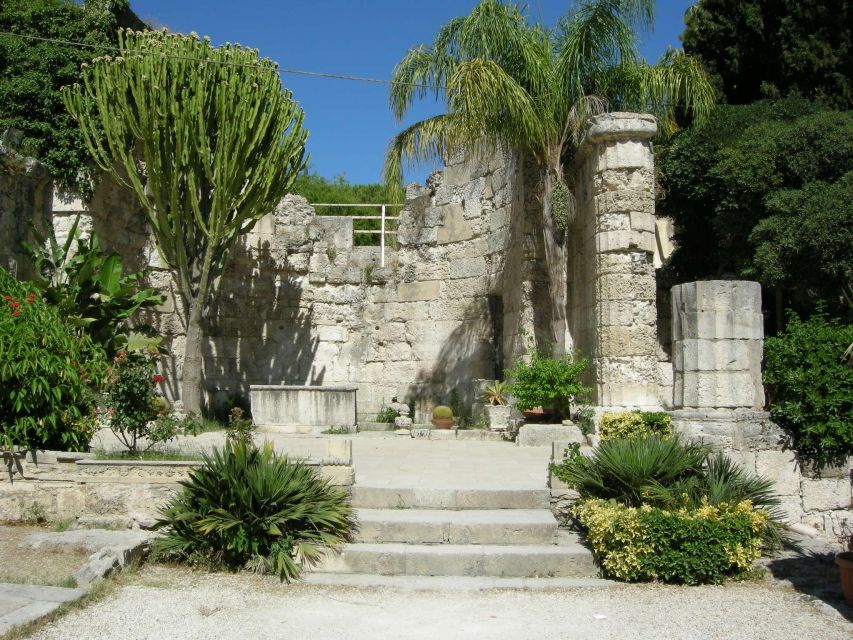
Next comes the Latomie del Paradiso, also allotted about 20 minutes. These ancient quarries were cut into the rock and later transformed into natural garden spaces. Their scale helps you picture the labor involved in shaping Syracuse, while the enclosed stone walls make this stop feel quite different from the open theater.
The guide can also explain the darker stories linked with the quarries. Accounts of Syracuse’s past include the rule and intrigues of Dionysus, and the tour uses those tales to give the stone setting a human dimension. A good guide will distinguish what the place is from what legend has added to it.
The garden setting is a welcome change of pace, though it is still a stop on a timed group route. If you want to linger over every feature, the tour may feel brisk. One practical plus is that guides have been noted for finding shaded spots to talk in hot, sunny weather. That is useful in Sicily, where a history lesson is easier to follow when you are not standing in full sun.
More guided tours in Syracuse:
- Syracuse: Ortigia and Neapolis Guided Walking Tour
★ 4.7 · 205 reviews - From Syracuse: Mount Etna Guided Morning Hike & Food Tasting
★ 4.8 · 173 reviews - Syracuse: Highlights of Ortigia Guided Walking Tour
★ 4.2 · 136 reviews
The Ear of Dionysius and its stories
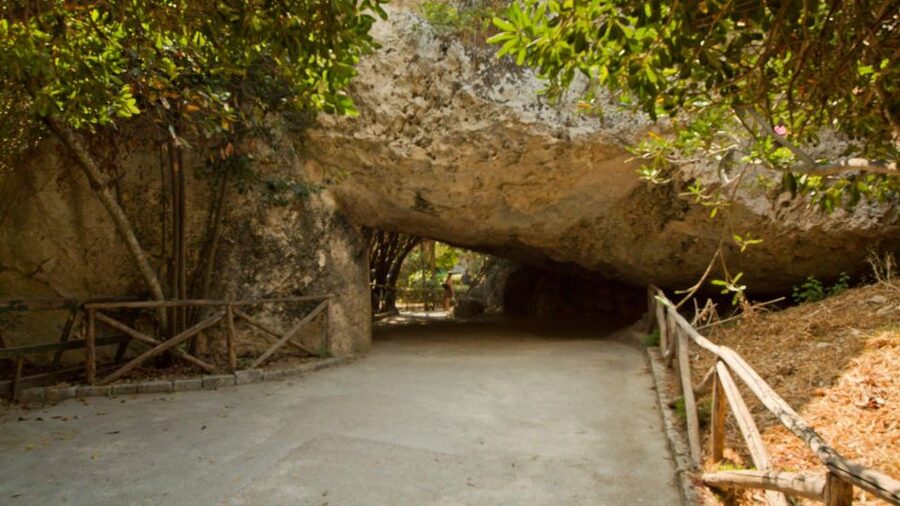
The Ear of Dionysius is a tall, cave-like space within the quarry area, known for its striking shape and acoustics. Its name and stories are tied to Dionysius, the ruler of Syracuse, and the cave’s sound effects have helped keep its legends alive. The guide explains the tales and the political intrigue associated with the tyrant.
This is one of the tour’s most distinctive stops because the setting itself does some of the work. A guide may demonstrate or discuss how sound behaves in the cave; one guide, Laura, was remembered for singing there. That kind of moment can make the acoustics easier to understand than a description alone, but it is not something you should count on in every tour.
The cave’s reputation can also blur the line between history and legend. Listen for the difference. The tour’s value lies not only in repeating a dramatic story, but in helping you see why the story became attached to this place.
Expect roughly 20 minutes here. That is enough for an explanation and a look around, but it may not satisfy anyone who wants an extended stop for photos or close inspection. If you are especially interested in the cave, keep that in mind when deciding whether a fixed two-hour route suits you.
The Greek Theater and the harbor view
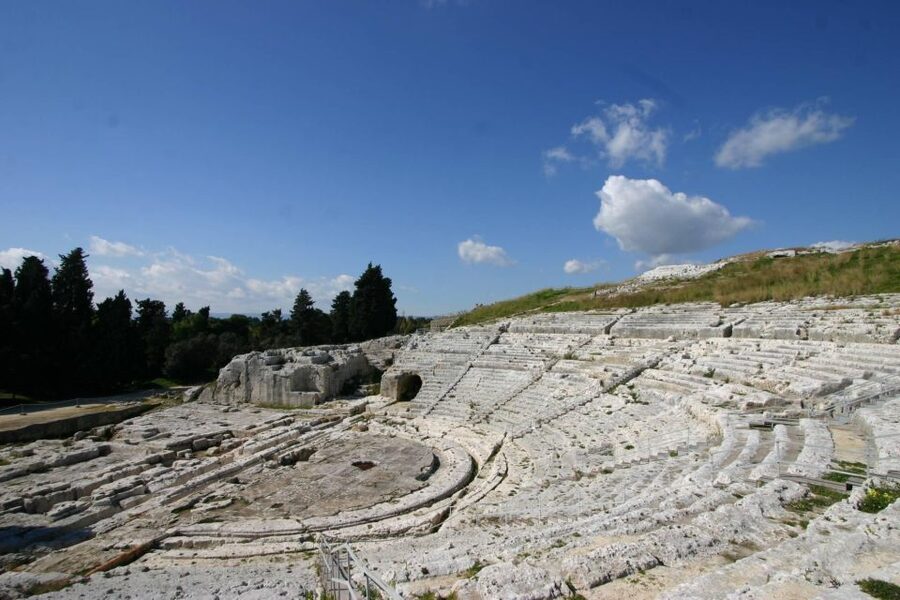
The Greek Theater is the headline monument for many visitors. It is a major example of Greek architecture in Sicily, and the guide explains its place in Syracuse’s ancient life. The route also takes in the Nymphaeum Fountain, with a view that reaches toward the Grand Harbor.
The setting is as important as the stone structure. From the theater area, you can take in the relationship between the ancient site and the harbor beyond it, a reminder that Syracuse was a major Mediterranean city. The view adds geographical context to the stories of Greek power and civic life.
The itinerary allows about 20 minutes at the theater. That is enough for a guided overview, but not necessarily for a long, unhurried visit. One visitor wished they could go down to the bottom of the Greek Theater. Access to that specific area is not promised in the tour details, so do not book expecting a particular level of access. If standing in different parts of the theater matters to you, check current access conditions before your visit.
It is worth listening closely here. Guides have been praised for explaining the site clearly and answering questions, including questions from people with a strong background in Classics. The explanations can add something even if you have already read about Greek theaters, since the guide can connect the structure to the surrounding Syracuse site.
Hieron II’s altar and the Roman Amphitheater
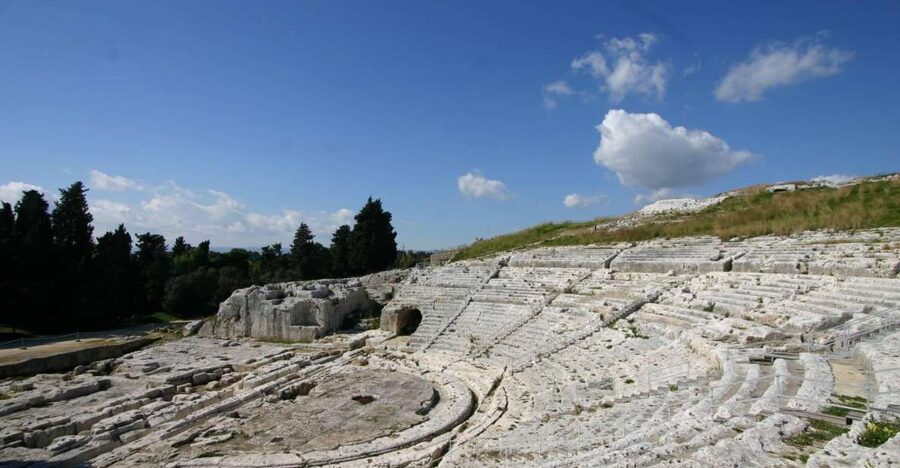
The Altar of Hieron II is another major monument in the park, described as a powerful reminder of Syracuse’s former importance. It is part of the broader Neapolis experience, though it is not given its own separate time slot in the listed itinerary. Your guide can place it in the story of the city and its rulers as you move through the area.
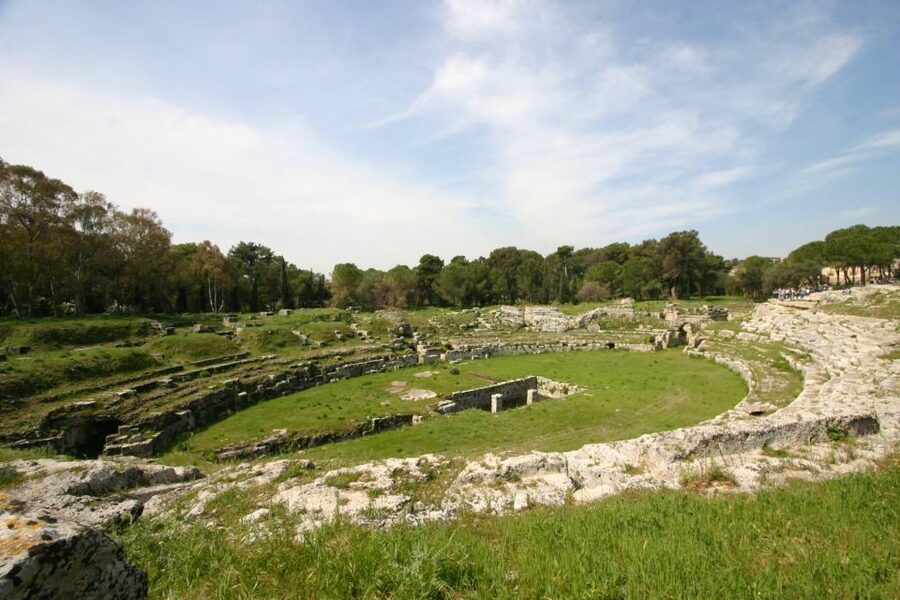
The final named stop is the Syracuse Roman Amphitheater, with about 20 minutes set aside for a visit and explanation. Here the focus shifts from Greek civic culture to Syracuse under Roman rule. The guide discusses gladiatorial games and the purpose of the amphitheater, giving you a useful contrast with the Greek Theater.
That contrast is one of the route’s strengths. The two performance spaces are not interchangeable: each belongs to a different period and served a different public purpose. Seeing both during one tour gives you a compact lesson in how Syracuse changed over time.
The Roman Amphitheater is the last stop in the route, so expect the tour to conclude after its explanation. The available details do not promise extra time for independent exploration afterward. If you want to linger, ask your guide what options are available before the group finishes.
Same island, a different kind of day:
- Syracuse: Boat Tour with Captain Mirko, Snorkeling & Caves
★ 4.7 · 746 reviews - Siracusa: Ortigia Boat Tour with Marine Grotto
★ 4.7 · 617 reviews - Siracusa: Ortigia & Sea Caves Speedboat Tour with Swim Stop
★ 4.9 · 499 reviews - Syracuse: Neapolis Archaeological Park Small Group Tour
★ 4.7 · 350 reviews
What the two-hour format gives you
The listed route breaks the park into short visits, generally around 20 minutes at each named stop. That pace keeps the experience focused and makes it possible to see several important sites in a single outing. It also means the tour is an introduction, not an exhaustive study of Neapolis.
For many people, that is the right balance. You get a guide’s explanation at the Latomie, the Ear of Dionysius, the Greek Theater, and the Roman Amphitheater, with the park’s wider story tying those places together. Families and first-time visitors can benefit from that structure, while history students may appreciate being able to ask questions and hear details beyond a basic monument description.
There are a few things to manage. The route involves walking, and the exact conditions of the path are not specified. Tours can also be conducted in Italian and English at the same time. That may mean waiting while the guide gives each explanation twice, and it can stretch the time spent at individual stops.
Sound is another consideration. Most praise for the guides focuses on their clear explanations and willingness to help, but one person had trouble hearing in a large group and suggested a microphone or headsets. If you have difficulty hearing in open spaces, try to stay close to the guide and ask early if you are missing details.
Is $51 fair value?
At $51 per person, the price includes both the Neapolis Archaeological Park entrance ticket and the guided tour. That makes the value easier to judge: you are paying for the park visit and for a local guide to interpret a site where a lot of the meaning is not obvious at first glance.
I think the guide is the main reason to choose this option over simply entering the park. Visitors have described guides who take questions, explain the ruins at a measured pace, and keep the group together. One guide, Luca, was also noted for adapting explanations to the heat by finding shaded places to stop. Those are practical qualities, not decorative extras.
The cost may feel less worthwhile if you prefer to explore independently, move at your own pace, or spend a long time at one monument. The guided route has a set duration and a fixed sequence, and the details do not specify group size. If you want to return to a favorite spot afterward, the included ticket is useful, but confirm whether you can remain in the park once the tour ends.
The booking terms offer some flexibility: you can reserve now and pay later, and cancellation is free up to 24 hours before the activity for a full refund. These terms are helpful if your plans are not settled, but check the conditions shown for your chosen departure when booking.
Who should choose this tour?
Choose this tour if you want a well-organized introduction to Syracuse’s major Greek and Roman remains and prefer a guide to supply the historical links. It is especially useful if you are visiting the park once, want admission handled with the tour, or enjoy asking questions as you go.
It also suits people who know some ancient history but want a local perspective. A Classics student found the explanations informative beyond university material, while other visitors valued guides who made the site understandable for a family group. That does not mean every departure will cover the same extra details, but the format leaves room for questions.
Consider a different approach if you want silence, a self-paced visit, or guaranteed access to a specific part of the theater. The tour’s mixed-language format may slow the pace, and a large group can make it harder to hear. You could still use the guided visit for an overview, then explore the park independently if your ticket and park rules allow.
Should you book?
For a first visit to Neapolis, I would book if you want the archaeology explained rather than simply photographed. The combination of the quarries, the cave, the Greek Theater, and the Roman Amphitheater gives you a strong sense of Syracuse’s changing past in two hours, and admission is included.
Go in with the right expectations: it is a guided introduction, not a private tour or a promise of unlimited access at each site. Arrive early, confirm your meeting point, and be ready for explanations in Italian and English if both languages are used. If those terms suit you, $51 is a reasonable price for a focused visit with local context.
FAQ
How long is the tour?
The tour lasts two hours.
What is the price?
The price is $51 per person.
Is the Neapolis Archaeological Park ticket included?
Yes. The entrance ticket is included and is provided by the guide at the meeting point.
Which places are included in the route?
The route includes Neapolis Archaeological Park, the Latomie del Paradiso, the Ear of Dionysius, the Greek Theater, and the Syracuse Roman Amphitheater. The experience description also mentions the Nymphaeum Fountain and the Altar of Hieron II.
What languages are available?
The live tour guide is available in Italian and English. The tour may be conducted in both languages at the same time.
Where is the meeting point?
There are two possible starting locations: the Neapolis Archaeological Park ticket office or MOMENTO Ristorante. Your meeting point depends on the option booked.
How early should I arrive?
Arrive at the meeting point 20 minutes before the tour begins.
Can I cancel and get a refund?
Yes. You can cancel up to 24 hours in advance for a full refund.
Newest tours in Syracuse
- Tour of Syracuse by Ape Calessino★ 3.0 · 3 reviews
- Boat tour of the island of Ortigia and the sea caves★ 4.2 · 4 reviews
- Tecnoparco Archimede Museum Exhibition Ticket★ 4.8 · 14 reviews
- Syracuse:Snorkeling+Pillirina, Ortigia & sea caves boat tour★ 4.8 · 18 reviews
- From Taormina: Syracuse Tour with lunch in Food Market★ 4.9 · 12 reviews
- Syracuse: Sicilian Street Food Hands-On Cooking Class★ 4.9 · 38 reviews
- Syracuse: Sunset Aperitif Tour★ 4.4 · 4 reviews
- Syracuse :Private boat trip con Prosecco/Aperitivo★ 5.0 · 4 reviews
Syracuse Tours, compared.
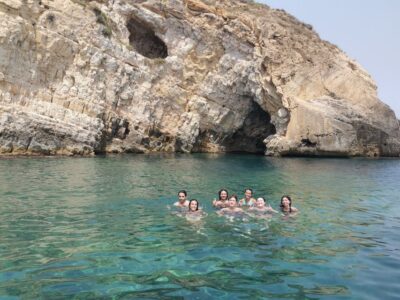

Ortigia & Sea Caves Speedboat Tour with Swim Stop
Read our review →

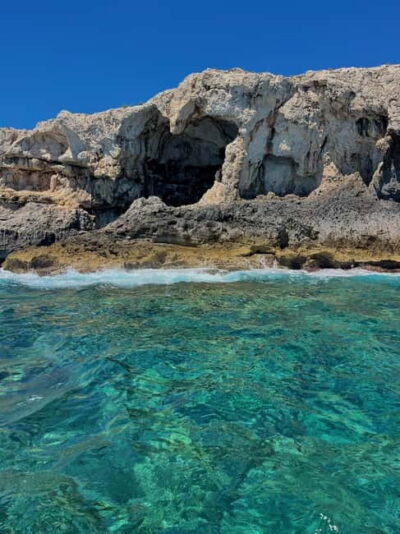
Ortigia Island and Sea Caves Boat Tour with Drinks
Read our review →
Street Food Walking Tour in Ortigia with Tastings
Read our review →
Browse the lists this tour appears in