
Reviewed · SYRACUSE TOURS
Syracuse: Greek Theater and Neapolis Guided Private Tour
Syracuse’s Neapolis puts a Greek theater, ancient stone quarries, a famous cave, and a Roman amphitheater within one archaeological park. I like that a certified guide can connect these separate sights to the story of the ancient city, and that a private group gives you the tour to yourselves rather than sharing the guide with strangers.
The two-hour route also includes striking natural features, from the greenery of the Latomie to the view over the harbor from the theater’s upper terrace. One consideration: there is a lot to see in a short time, so expect a brisk overview rather than a leisurely visit to every monument.
Key points at a glance
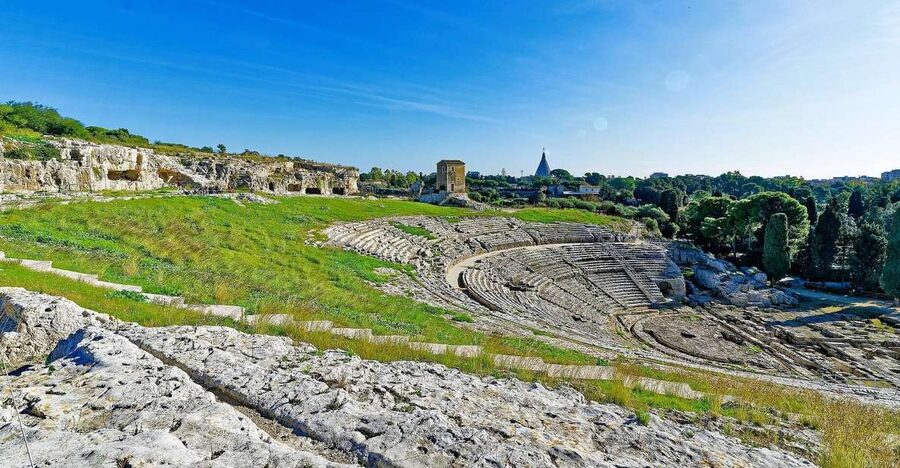
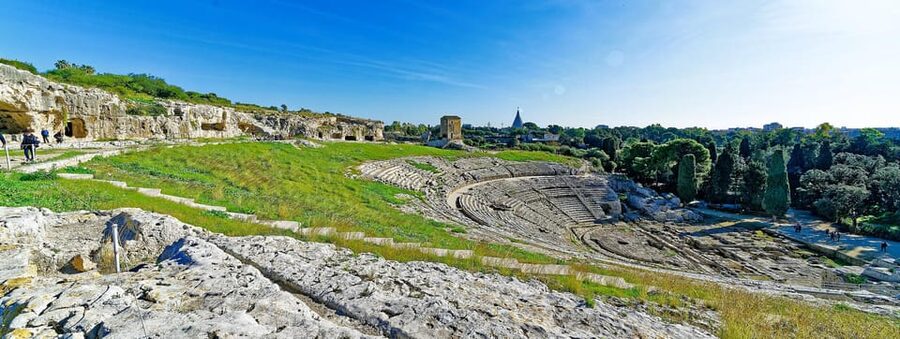
- The Greek theater is the route’s headline stop, set high enough for a view toward the Fountain of the Nymphaeum and the large port.
- The Ear of Dionysus is a striking cave in the old stone quarries, known for its shape and unusual acoustics.
- The route spans Greek and Roman Syracuse, including the Altar of Hieron II and the Roman amphitheater.
- Your guide leads a private group of up to 15, with tours available in English, German, Italian, Spanish, and French.
- The pace is efficient: two hours covers several major sites, but leaves little room to linger.
- Guide quality matters: Rita and Cristina are names associated with particularly strong accounts of the experience, though your assigned guide may be someone else.
Why Neapolis makes a strong introduction to Syracuse
Syracuse was one of the important centers of the ancient Mediterranean, and Neapolis gives you a concentrated way to see why. This guided visit moves through monuments tied to different periods of the city’s past, from Greek theaters and quarries to a Roman amphitheater. Instead of treating each site as a separate photo stop, your guide can explain how the pieces fit into the story of the polis of Syracuse.
That context is the main value of the tour. A theater is impressive on its own, but its purpose and place in the city’s history give it more meaning. The same goes for the Latomie, which were not simply dramatic caves: they were stone quarries that supplied material for the city and later served as places of work and imprisonment.
The park also blends constructed monuments with striking natural features. The old quarries are now covered in greenery, and the Ear of Dionysus and Cordari Cave bring a different kind of interest from the open-air theater and amphitheater. You get an overview of both the city’s built past and the setting that shapes the experience today.
More private tours in Syracuse:
- Syracuse: Ortigia Private Walking Tour
★ 4.8 · 181 reviews - Siracusa: Private Boat Excursion to Ortigia with Prosecco
★ 4.6 · 27 reviews - Siracusa: PRIVATE boat excursion 2,5h
★ 5.0 · 15 reviews
Starting at the Neapolis entrance
You meet your guide at the entrance to the archaeological park, though the exact meeting point can vary with the option booked. The tour begins with a short briefing about Syracuse’s origins before you enter Neapolis. That opening matters: it gives you a basic frame for the monuments ahead, rather than asking you to piece together the city’s story on your own.
Because this is a private tour, the guide is there for your group, which can make it easier to ask questions as you go. The maximum group size is 15, so the experience can suit a family or a group of friends who want a shared guide. If your party is small, the price is still charged per group, not per person.
The tour is listed at $283.21 for a group of up to 15. At the maximum group size, that works out to about $18.88 per person. For fewer people, the per-person cost rises, so the value depends on the size of your party and how much you want a guide’s explanations. The price includes a certified guide; anything not specified as included is not covered.
The Latomie and the Ear of Dionysus
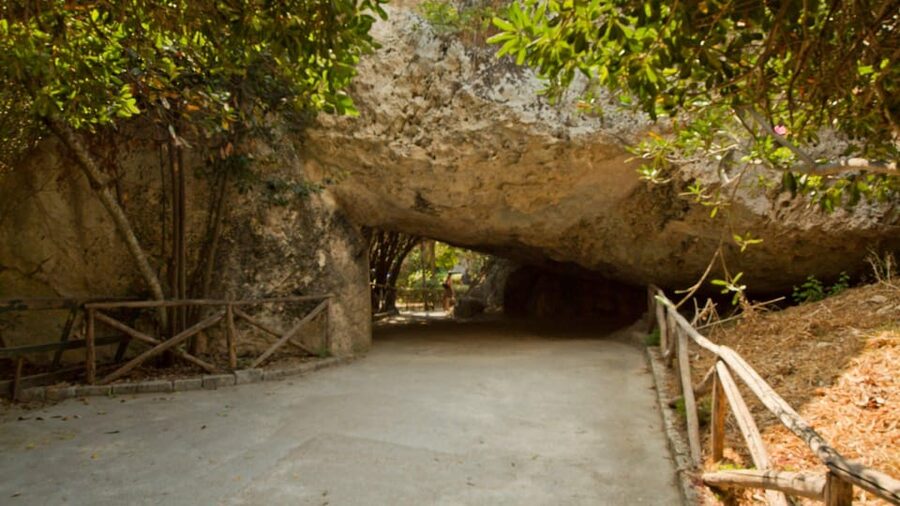
The Latomie are ancient stone quarries where material was extracted for Syracuse’s construction over centuries. Their former use as work sites and places of imprisonment gives them a harsher history than their present appearance suggests. Today, greenery covers the quarries, creating a striking contrast between the natural setting and the labor once carried out there.
Within the Latomie, you visit the Ear of Dionysus. Its distinctive shape and particular acoustics are central to its fame, and your guide explains the legend connected with the cave and the tyrant Dionysius. The mix of physical form, sound, and story makes this one of the most memorable stops on the route.
Keep in mind that the tour offers an explanation of the cave, not a separate, extended visit focused only on its legends. The two-hour schedule also includes several major monuments. If the Ear of Dionysus is your main reason for coming, you may want to ask your guide how much time the group can spend there.
Next comes the Grotta dei Cordari, or Cordari Cave. It adds another view of the quarry area before the route reaches the Greek theater. The available details do not specify a separate activity inside the cave, so think of it as one part of the guided walk through the Latomie rather than a standalone attraction.
The Greek theater and harbor view
The Greek theater is one of the largest in the Mediterranean and a central stop on this visit. Its scale makes clear why it ranks among the park’s defining monuments. With a guide, you can place the theater within the history of Syracuse rather than seeing it only as a grand structure carved into the site.
From the upper terrace, you can admire the Fountain of the Nymphaeum and a panorama over the large port. This is a useful pause in a route otherwise filled with ancient structures and stories. Take a moment to look out, not just down at the monuments: the view helps connect the archaeological park to the city around it.
The tour is only two hours, so the amount of time at the theater may feel limited if you like to study a site at your own pace. The trade-off is that the guide can introduce several key places in one visit. If you want more time for photographs or a closer look, plan to return to parts of the park after the guided portion if your schedule allows.
For tours in Italian, the experience includes the show Il mito di Aretusa. This is a specific extra tied to the Italian-language option, so do not assume it is part of tours in other languages. If the show matters to you, confirm that you are booking the Italian tour.
More guided tours in Syracuse:
- Syracuse: Ortigia and Neapolis Guided Walking Tour
★ 4.7 · 205 reviews - From Syracuse: Mount Etna Guided Morning Hike & Food Tasting
★ 4.8 · 173 reviews - Syracuse: Neapolis and Greek Theater guided tour
★ 4.5 · 160 reviews - Syracuse: Highlights of Ortigia Guided Walking Tour
★ 4.2 · 136 reviews
The Altar of Hieron II and the Roman amphitheater
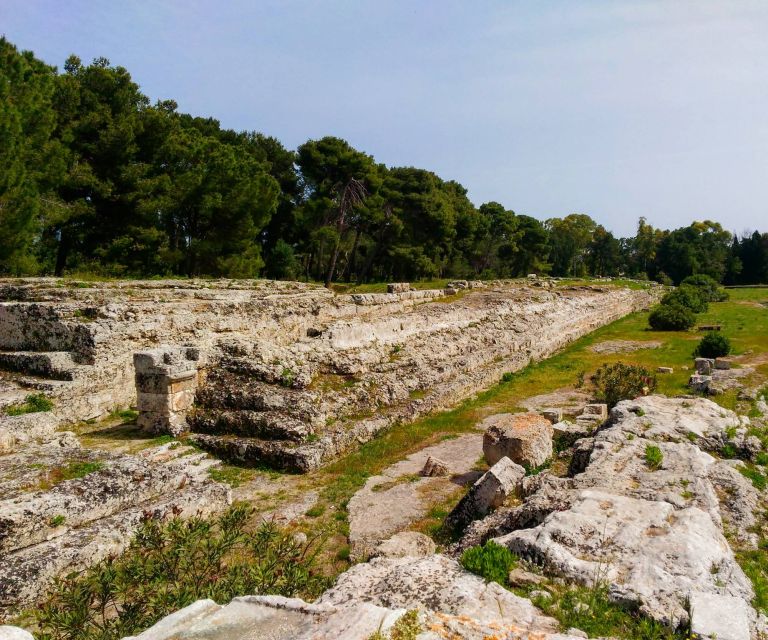
After leaving the theater, the route continues to the Altar of Hieron II, described as the largest stone altar built in the Greek world. Its size gives you another way to understand the scale of ancient Syracuse, beyond the theater’s capacity and architecture. The guide can explain why it matters in the broader story of the city.
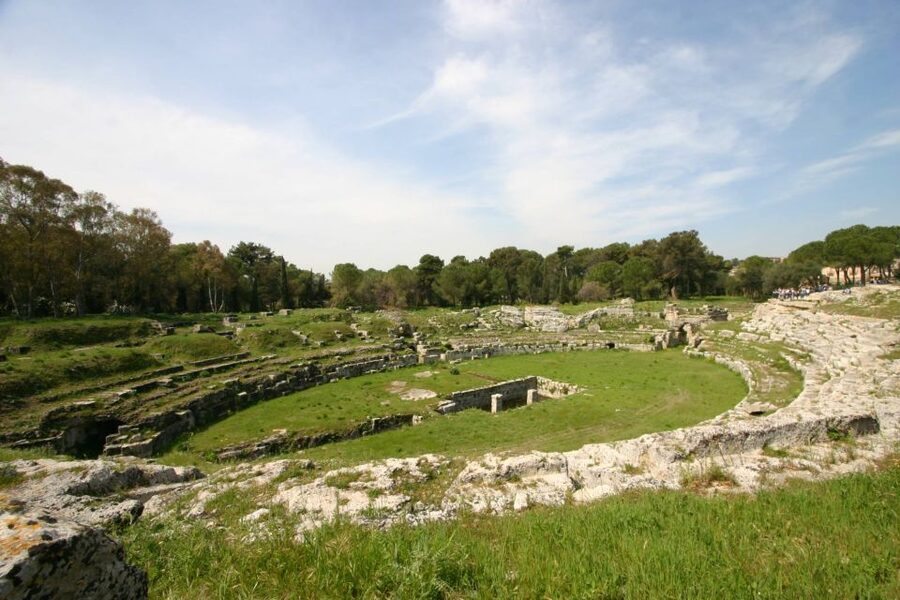
The final monument is the Roman amphitheater. Here the focus shifts to the Roman phase of Syracuse, including the building’s characteristics and the particularities of gladiatorial games. That transition is one of the tour’s strengths: the route does not present Neapolis as belonging to just one era.
The amphitheater also rounds out the experience with a different kind of public space from the Greek theater. You leave having seen major examples of both Greek and Roman construction, along with caves, quarries, and a view over the port. In two hours, that is a useful cross-section of the park, even if it cannot replace a longer independent visit for someone who wants to explore every monument at length.
The guide, group size, and pace
The tour is led by a certified guide and offered in English, German, Italian, Spanish, and French. The language range is helpful for mixed-language groups or for anyone who prefers to hear history explained in a language they know well. The group is private, with a limit of 15 people.
Guide quality can make a real difference at an archaeological site, where dates and names can blur together without a clear explanation. Rita is specifically associated with a strong account of the history, while Cristina is praised for explaining details and helping visitors appreciate the park and its natural beauty. These names give you a sense of the kind of guide-led experience available, but they are not a guarantee that either person will lead your tour.
The short duration is both an advantage and a constraint. You can cover the major sights without giving the park an entire day, which is useful if Syracuse is one stop on a larger trip. But the route is packed, and you may need to keep moving rather than pausing as long as you wish at each site.
Bad weather can lead to a change or cancellation of the reservation. Starting times depend on availability, and the meeting point can differ by booking option. The tour ends back at the meeting point. You can cancel up to 24 hours in advance for a full refund, and the reserve-now, pay-later option lets you hold a place without paying immediately.
Who will get the most from this tour
This is a good fit if you want a guided introduction to Neapolis and prefer the ease of having one person explain the major sites in sequence. It should suit first-time visitors to Syracuse, history-minded families, and small groups who value a private guide. The range of languages also makes it practical for international groups.
It may be less suitable if you want a slow, unhurried visit or expect to spend a long time at one particular monument. Two hours is enough for an overview, not an exhaustive study. If your priority is independent exploration, you may prefer to visit the park on your own and use a guide only if you want help with the historical context.
The strongest reason to book is the combination of major monuments and a guide’s explanations. The Greek theater, Ear of Dionysus, Latomie, altar, and amphitheater each offer something different, and the guide ties them to Syracuse’s past. The strongest reason to pause before booking is the price for a small party: it becomes much better value when shared among a larger group.
Should you book the Neapolis private tour?
Book it if you want a brisk, guided look at Syracuse’s major ancient sites, especially if your group can share the fixed price. The explanations of the Latomie, the Ear of Dionysus, the Greek theater, and the Roman amphitheater give the visit a useful historical thread. I would choose it for an efficient introduction, not as a substitute for a long day spent exploring the park at your own pace.
If you book, check the language and meeting point for your chosen option, and remember that the Italian tour is the one associated with Il mito di Aretusa. With the right expectations, this is a practical way to see the heart of Neapolis and understand what you are looking at.
FAQ
How long is the tour?
The tour lasts two hours.
What sites are included?
The route includes the Latomie, Ear of Dionysus, Grotta dei Cordari, Greek theater, Altar of Hieron II, and Roman amphitheater.
What languages are available?
The live guide is available in English, German, Italian, Spanish, and French.
Is the tour private?
Yes. It is a private group tour, with a maximum group size of 15.
What is included in the price?
A certified guide is included. Anything not specified as included is not covered.
Is the show Il mito di Aretusa part of every tour?
No. The show is included if you choose a tour in Italian.
What happens if the weather is bad?
In bad weather, the reservation may be modified or canceled.
Newest tours in Syracuse
- Tour of Syracuse by Ape Calessino★ 3.0 · 3 reviews
- Boat tour of the island of Ortigia and the sea caves★ 4.2 · 4 reviews
- Tecnoparco Archimede Museum Exhibition Ticket★ 4.8 · 14 reviews
- Syracuse:Snorkeling+Pillirina, Ortigia & sea caves boat tour★ 4.8 · 18 reviews
- From Taormina: Syracuse Tour with lunch in Food Market★ 4.9 · 12 reviews
- Syracuse: Sicilian Street Food Hands-On Cooking Class★ 4.9 · 38 reviews
- Syracuse: Sunset Aperitif Tour★ 4.4 · 4 reviews
- Syracuse :Private boat trip con Prosecco/Aperitivo★ 5.0 · 4 reviews
Syracuse Tours, compared.
Ortigia & Sea Caves Speedboat Tour with Swim Stop
Read our review →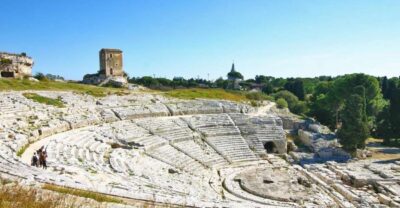
Ortigia Island and Sea Caves Boat Tour with Drinks
Read our review →
Street Food Walking Tour in Ortigia with Tastings
Read our review →
Browse the lists this tour appears in